

Peru 2026 Journal

(Click any pic for large photo)
Having hiked across Costa Rica in 2023, and then 300 miles in 3 countries in 30 days in 2024, I was looking for something new to try this year. I heard that the Inca Trail 4-day hike to Machu Picchu is a good adventure, and the more I researched it, the more I wanted to hike it. But, it's only 4 (or 5) days so we'd need to add some other days of hiking to fill a couple weeks and justify the long flight to Peru.
When I mentioned it to our neighbors, they were interested in visiting Machu Picchu, but not a 'camping' trek. So, after more research, I found that the area around the Sacred Valley (where you find Machu Picchu) has a lot of interesting ruins and cultural attractions and activities that could easily fill our time. A tourist company was hired and they came up with a nice itinerary for the four of us that would include a lot of walking, but no camping. It's a new way to explore for me, but I'll let you read on to find out how well it worked out.
Friday, Sep 11, 2026
Lodging: Wyndham hotel at Lima airport
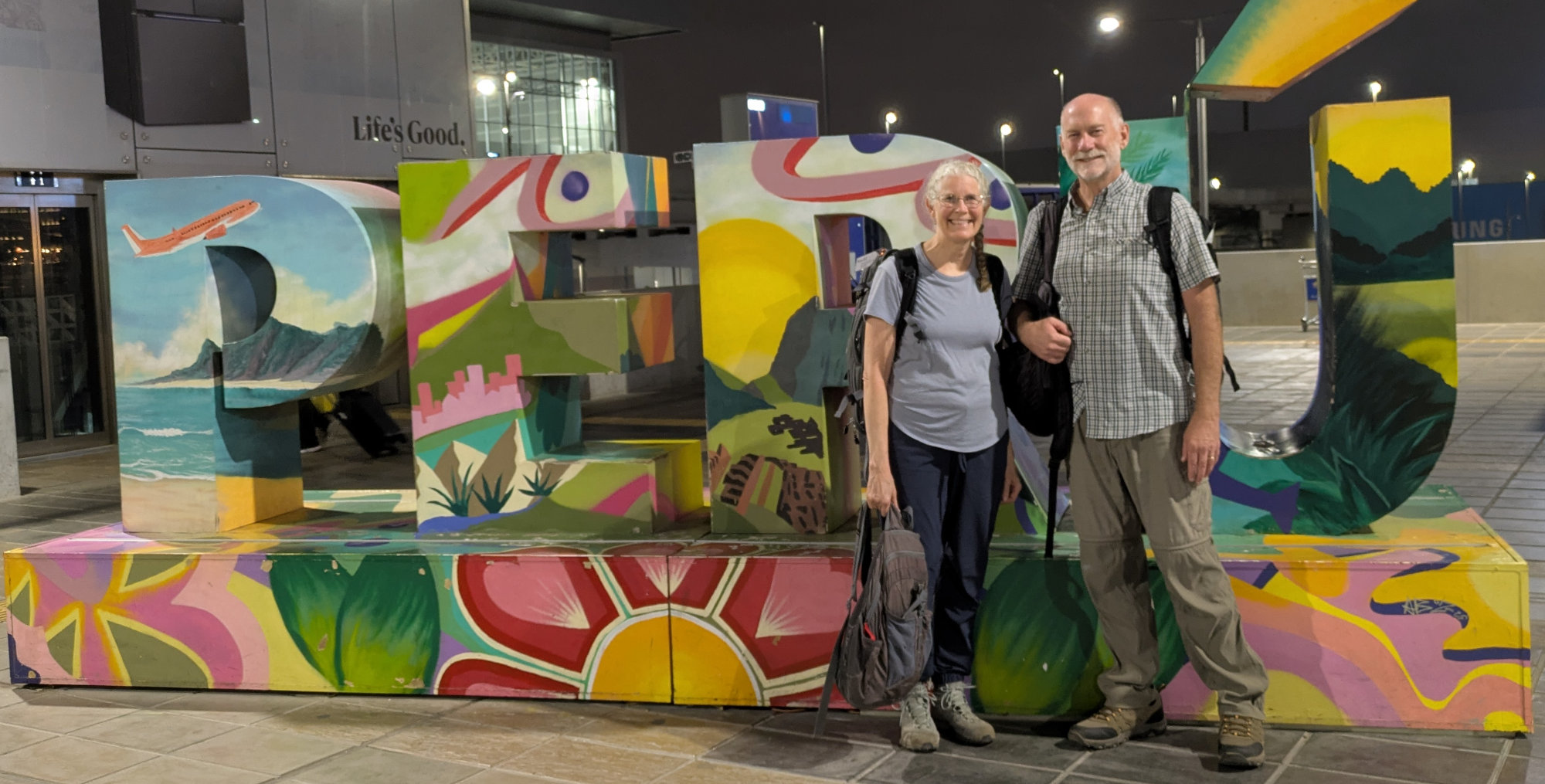
Travel days are usually just a torture you endure to reach your adventure, or to return back to your own comfortable bed. Today, we were super fortunate! Our flight to Miami left on time, was smooth, and we had an exit row to ourselves - soooo much leg room for me.
The long flight from Miami to Lima, Peru was just as good. Again, an exit row with tons of space, and everything was right on schedule. So, we hopped off the plane in Lima at about 10:30pm and met the nice man that walked us across the street to our hotel. That's pretty much the entire day.
Saturday, Sep 12, 2026
Lodging: Sonesta Hotel Posadas del Inca Yucay
No, we're not finished with airplanes yet. After a typical hotel breakfast, we hopped yet another plane to take us to Cusco, Peru to meet our guide and start our adventure.
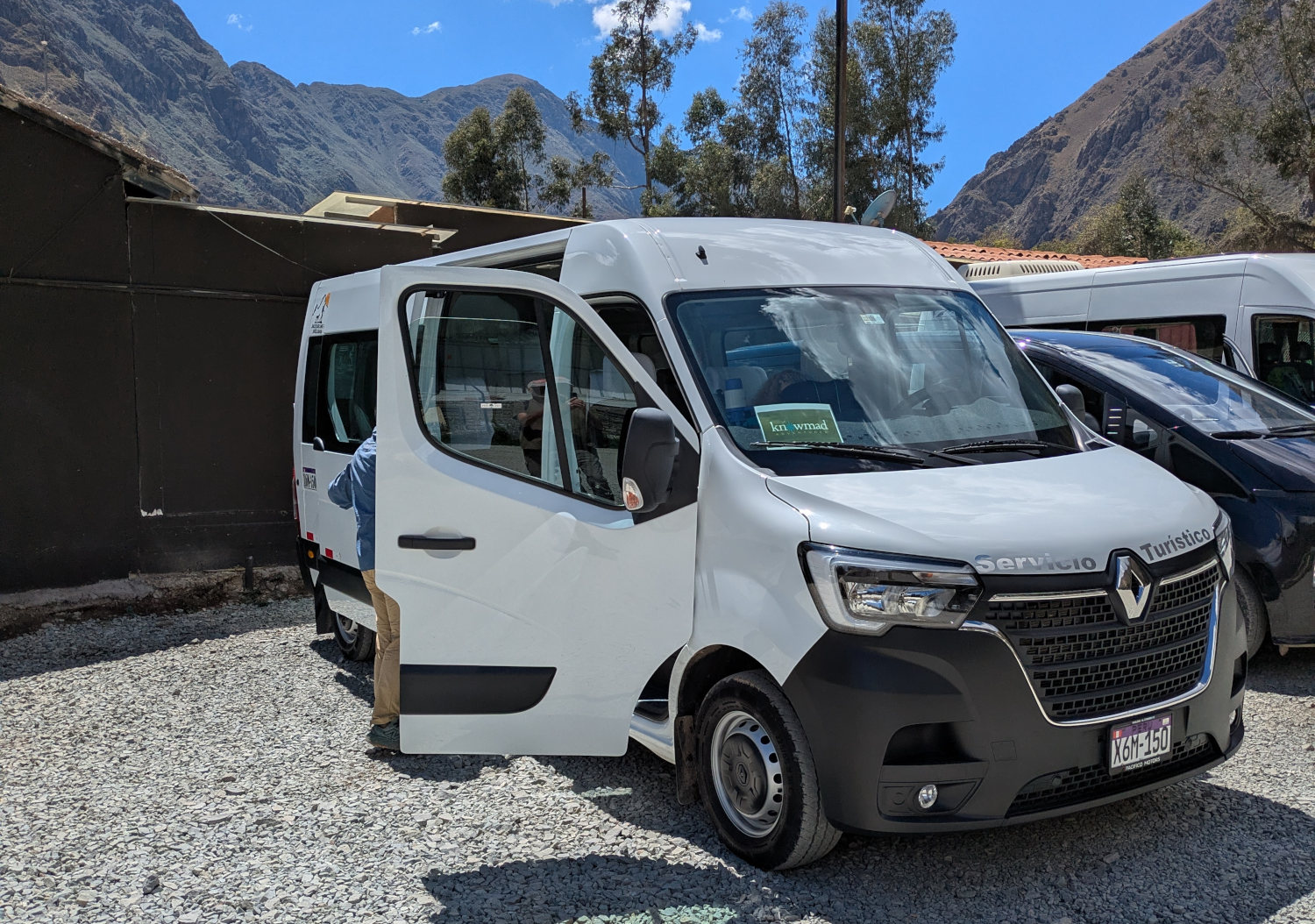
When we landed at the small Cusco airport, right in the city, we were met by our local guide named Juan Carlos Duenas. We also met our driver, Mario, who whisked us away to view our first Inca ruins on the outskirts of town. This van will be where we spend a lot of time over the next week or so.
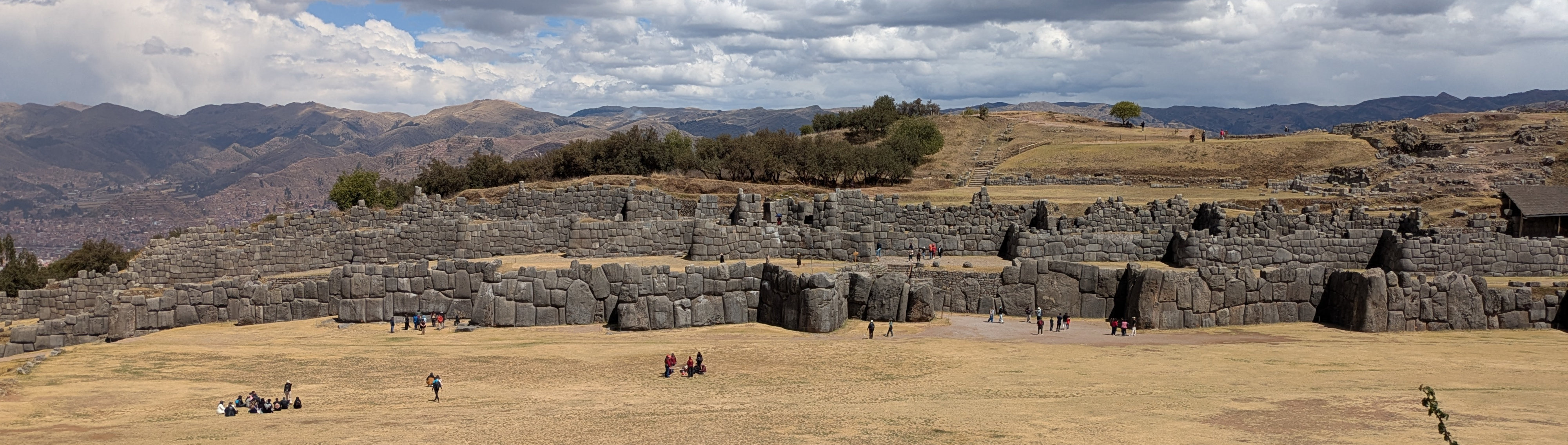
Sacsayhuaman is a large area situated on a hill overlooking Cusco. Juan Carlos says it's easiest to pronounce it "sexy woman".
My first encounter with Inca architecture - simply amazing! The massive size of the rocks and their perfect fits are unbelievable. So many questions:
- Where is the quarry?
- How were they cut?
- How were they moved?
- How long did it take?
- How many workers?
With no written records, all the questions can only be answered with best guesses, but I'm definitely not ruling out aliens at this point. It just doesn't seem possible to achieve their constructions with only wood and stone tools - the Inca did not have iron or steel.
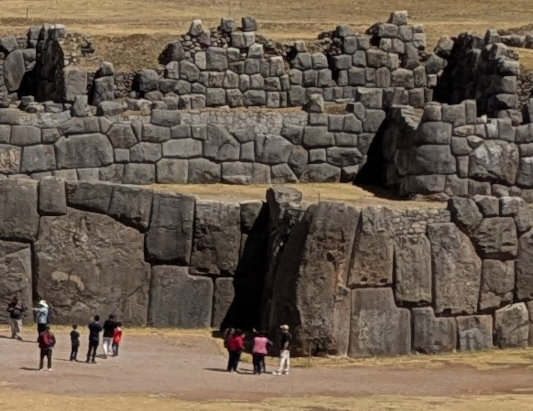
Just look at the size and fit of those stones in this close-up of the photo above!
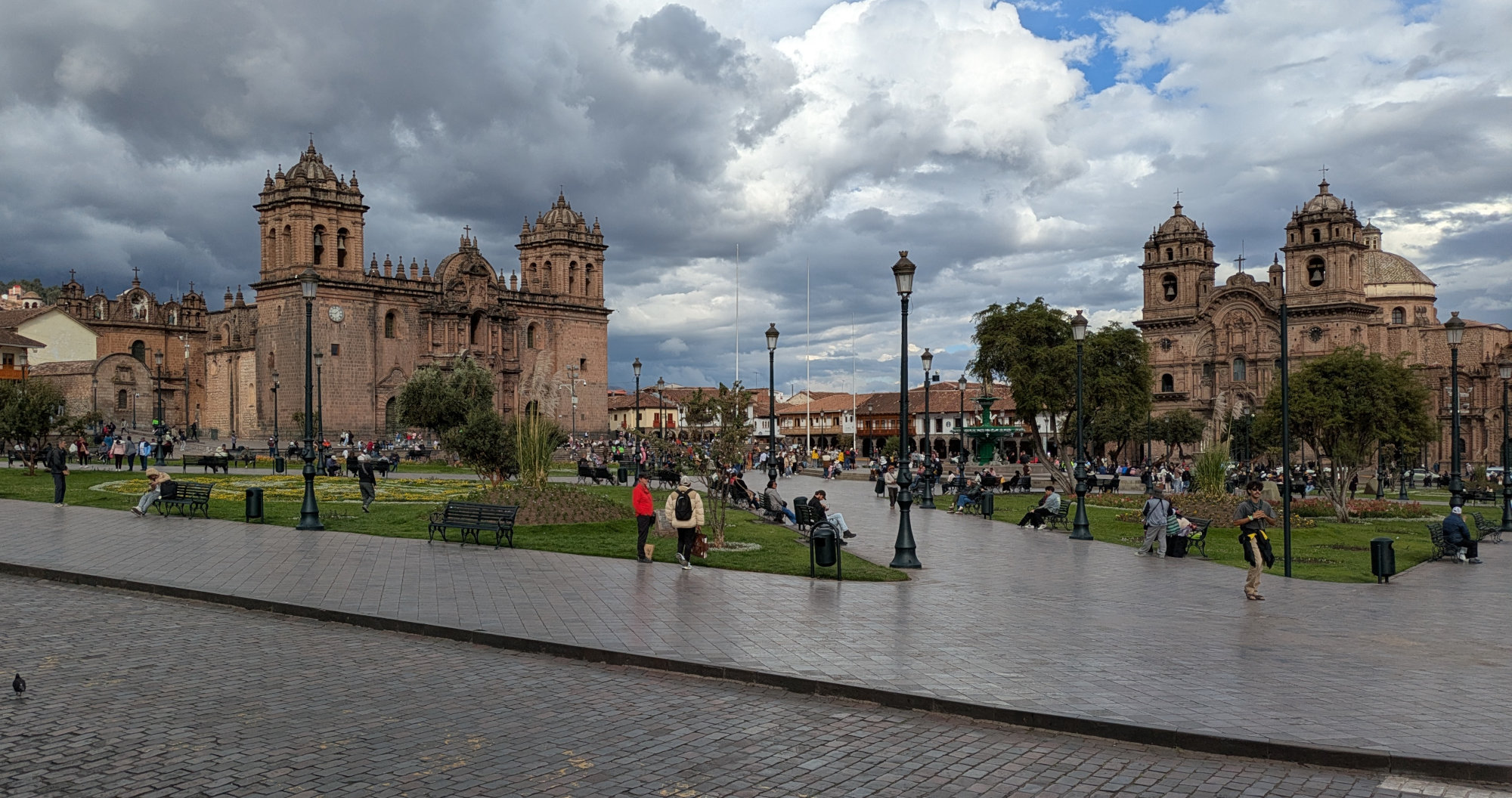
To help us get used to the 11,000 foot elevation of Cusco and very arid air, we only walked a couple miles total today. It was plenty. After walking through Sacsayhuaman, we drove back down to Cusco for a late lunch in the historic square area.
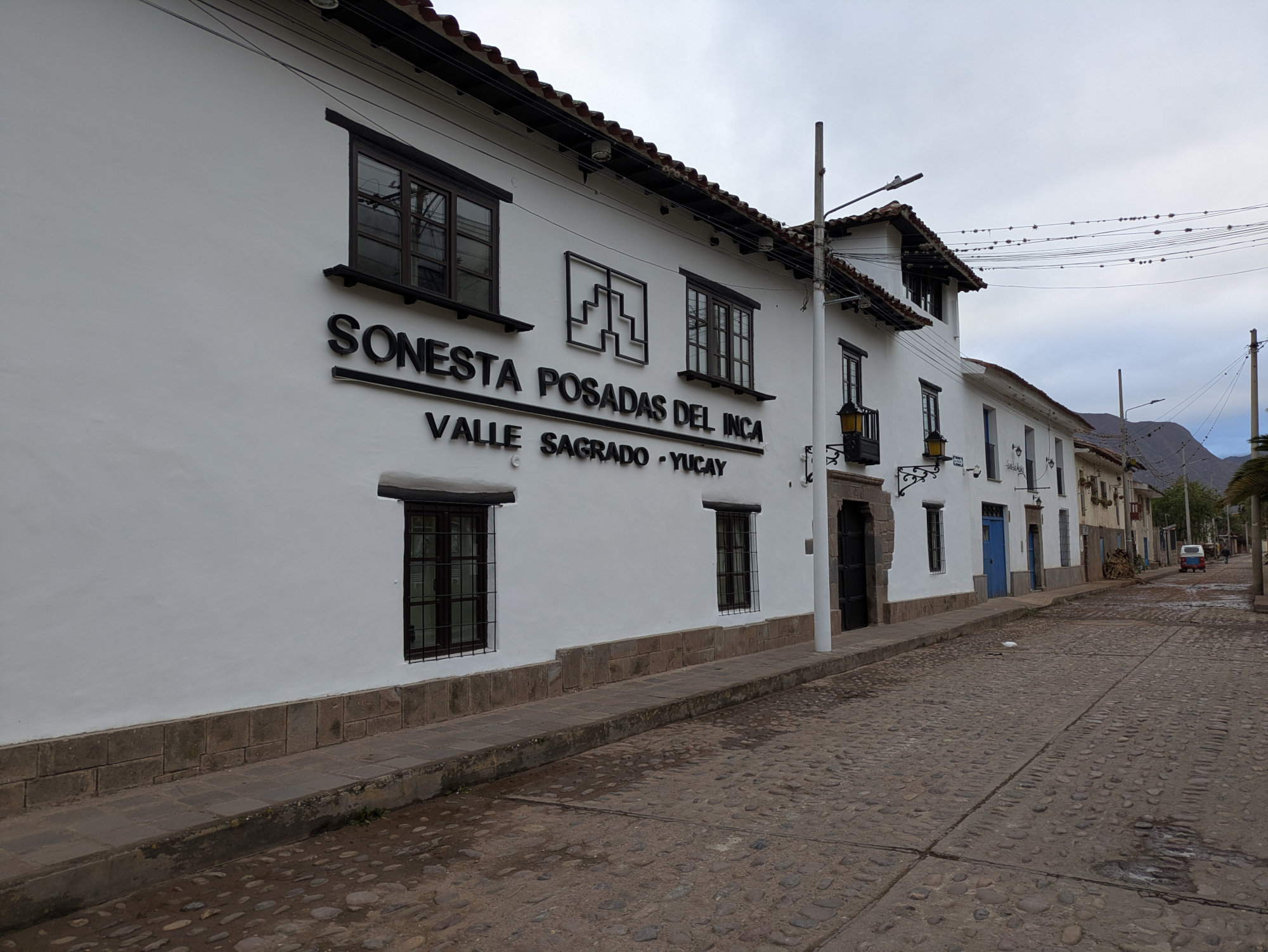
We drove up the hills out of Cusco over 12,000 feet and down the steep road into the Sacred Valley where we stayed at Sonesta Hotel Posadas del Inca Yucay in the town of Yucay. This is just the front of the lodging, but it is a sprawling complex of buildings and paths through garden areas.
Sunday, Sep 13, 2026
Lodging: Sonesta Hotel Posadas del Inca Yucay
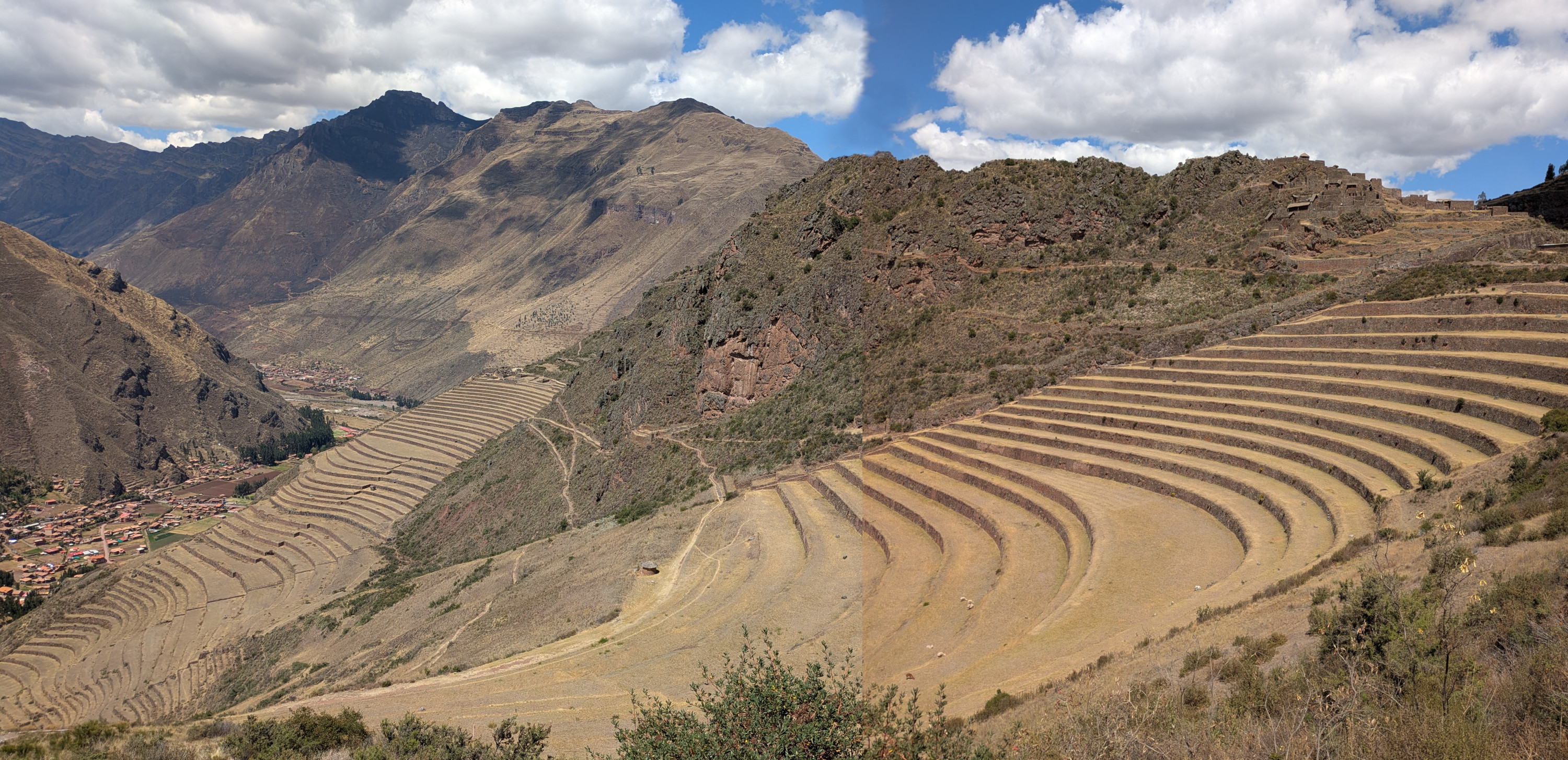
After breakfast, our day started with a drive up the Sacred Valley through the town of Pisac to check out an expansive system of Inca farming terraces and ruins. This place on the mountain above Pisac is called Citadelle de Pisac Q'allaqasa (even though it is not believed to have been a citadel or fort).
I had to piece together two photos to show the expanse of this place. If you notice small white dots on the closer terraces, those are sheep and there is a brown llama at the bottom. There is no farming here any longer, but it is used for grazing.
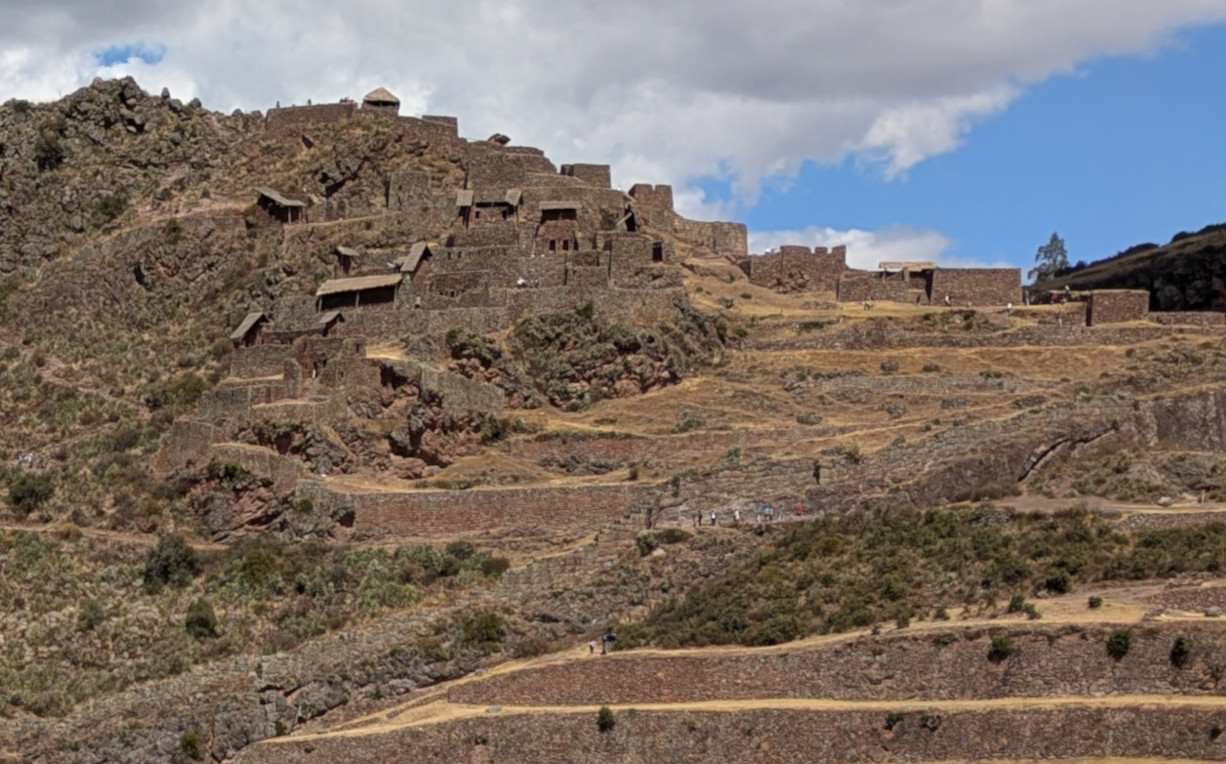
This is zoomed in on the upper-right of the previous photo to show the 'fort' on the top of the ridge.
Learn More about the Pisac complex.
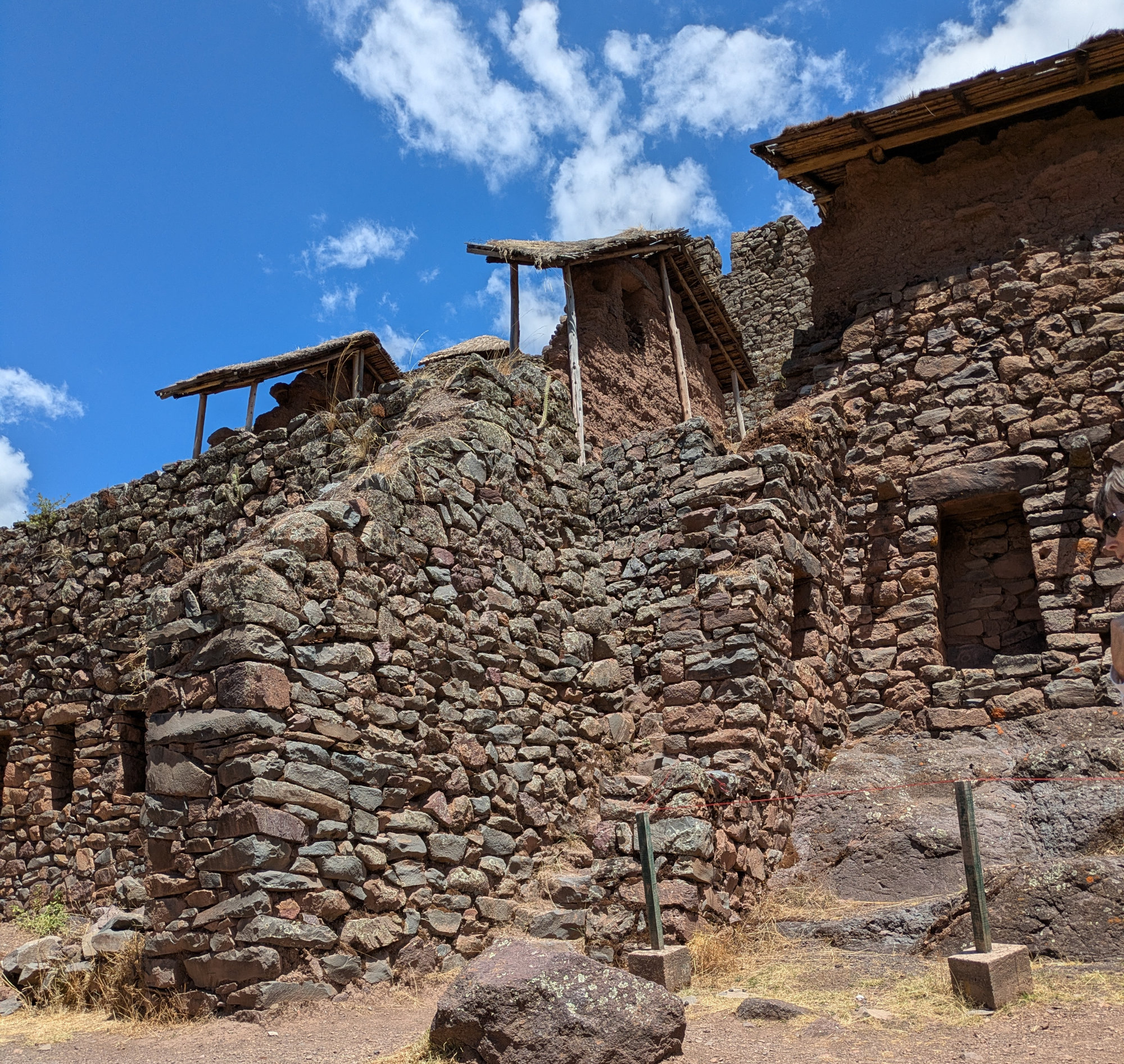
And, this is one of the buildings at the top of the complex.
We are here at the end of the dry season (May through September), so it is very arid and the grass is dead. During the wet season, especially near the end in March, the land is much more green. In the fields on the valley floor, with a bit of irrigation, rows of corn were just beginning to come up during our trip.
We continued our drive up the mountains above Pisac to the village of Amaru. I was surprised to see locals walking along the road wearing traditional clothes, as if they were in a living history museum. But, it's what they still wear daily. We were told that each village has varying designs in their clothes patterns and colors that identify them.


We visited Amaru to learn how rough alpaca and sheep hair is turned into these beautiful clothes.
We met a handful of very skilled women and spent some time watching them harvest, spin, dye, and weave hair into fabric. We even got to dress up and try our hand at the skills.
Seeing the bland, cream-colored fibers change color in the pots of dye made from various natural items such as minerals and plants was very impressive. They even let (coaxed!) us into wearing some Peruvian clothes.

And, we got to try guinea pig. Guinea pig has been a staple in this area for eons. It's easy protein. But, I don't need to eat it again - once was enough. Small and greasy - what you might expect a rodent to taste like.

Back on the flood plain of the Sacred Valley in the evening, we walked from our hotel on an Inca path along a waterway up to the foothills for a nice sunset before dinner.
Monday, Sep 14, 2026
Lodging: Sonesta Hotel Posadas del Inca Yucay
Guess where we drove this morning - that's right, up the windy road out of the Sacred Valley. This time, it was for a short tour of the Maras salt pans.

The village of Maras sits on the plateau above the Sacred Valley. Somewhere under the mountain under Maras, there is a vast store of salt that was deposited when the ocean that covered all this area receded. Water soaks deep underground, dissolves salt, and a natural spring brings it to the surface in a small gully above the Sacred Valley.
One day, a thirsty traveler stopped for a drink and found it was salty water. Wouldn't that have been a surprise?! Researchers have found evidence that this salt source has been used for over 3,000 years, so that first discoverer was long ago. The construction of the evaporative salt pans themselves are pre-Incan and then expanded by the Inca people. Read More.

There are around 3,000 salt pans now, each managed by a family of Maras. Around 300 pounds of salt are produced each month from each pan. Most salt is produced during the dry season, which makes sense since it relies on evaporation.
Our next stop was to view the Agricultural Research Center of the Inca, called Moray, that sits at about 11,500 feet. This was yet another amazing testament to the knowledge of this society. A natural sinkhole was terraced so small amounts of crops could be grown at various elevations down into the hole.

The temperature at the bottom of the bowl can be 27 degrees warmer than at the top. Also, rainwater during the wet season drains out of the sinkhole, so the bowl never floods. This allows each level of terrace to be its own micro-climate, and that allowed the Incas to test how well various crops grow at various temperatures. Besides that, tests on the soil in the terrace show that some of it was transported here from the jungle, coast, and high mountains.
But, Wait a Minute!
That is only one theory about what Moray was used for, and it is the more common explanation you'll hear from guides. Doing a little more research when I got home, it turns out that a more recent theory has weight.
There is a (very good) chance that Moray was a ceremonial site rather than agricultural research. The night temperatures, even in the sinkhole, at this high elevation are cold enough to kill crops much of the year. There are no remnants of housing that would be needed by the many people tending the test crops. There is no irrigation or water access for the test crops. So, by the time you visit, the story may have changed.

After exploring Moray, we drove to a local farm for an outdoor lunch in a tent. This was a surprise to have such a fancy meal in a farmyard.

After lunch, we hiked across the hillside, through agricultural fields, and across a gully to a small town where Mario met us in his van to drive us back down into the valley. (I think this might have just been added to the itinerary for us since we said we wanted to do some hiking. :-) )

Hiking across Costa Rica, and the West Coast Trail in British Columbia, I found abandoned motorcycles along the way. On this trip, I only found this car.
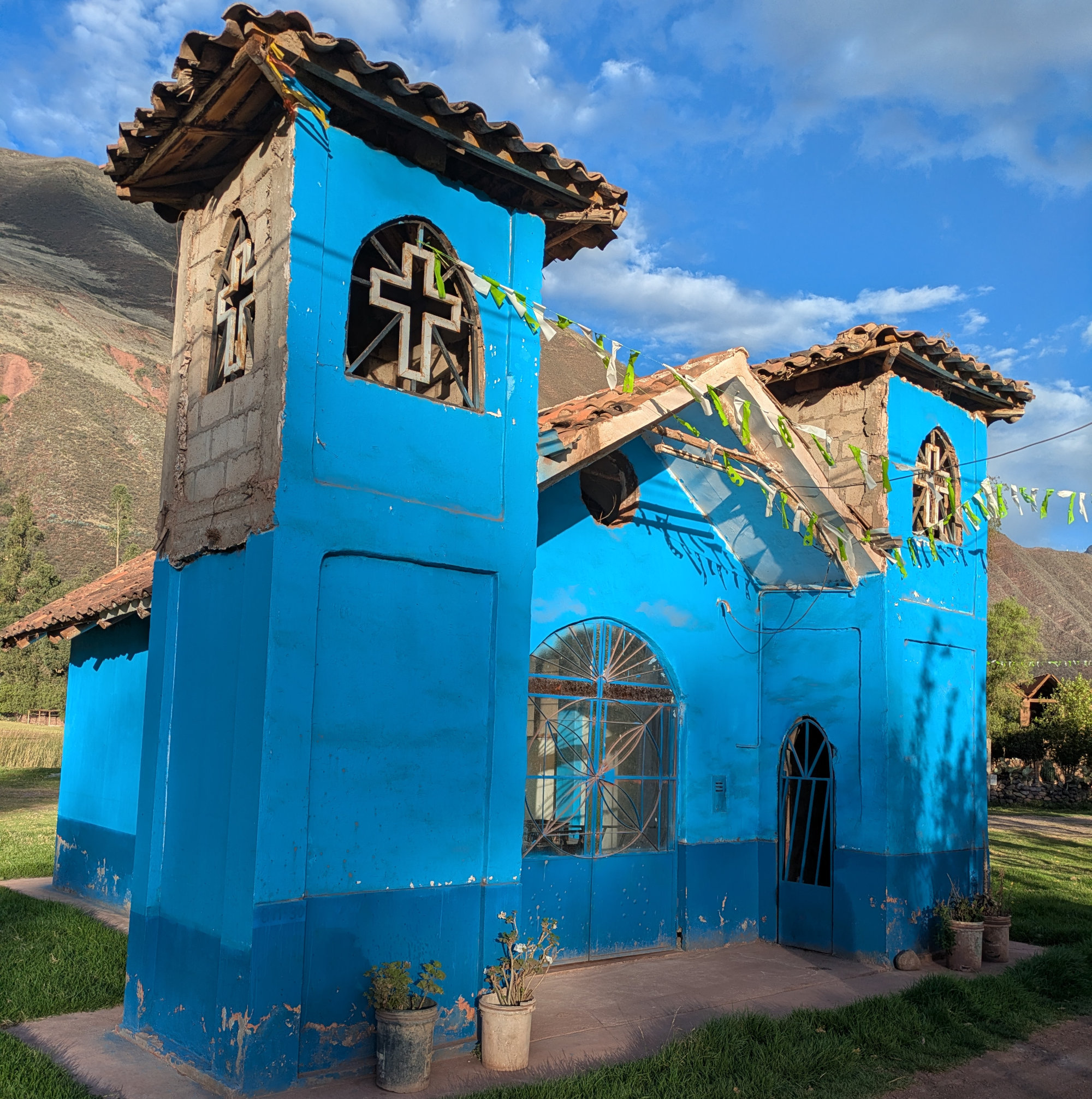
We took our friends up the Inca trail from our hotel for another evening stroll around Yucay. This time was much longer, discovering a rooster fighting arena, this blue church, and folks walking home from work. Just walking around a town and meeting people in their normal daily lives is one of things I like most about travel.
Tuesday, Sep 15, 2026
Lodging: Jesus' house
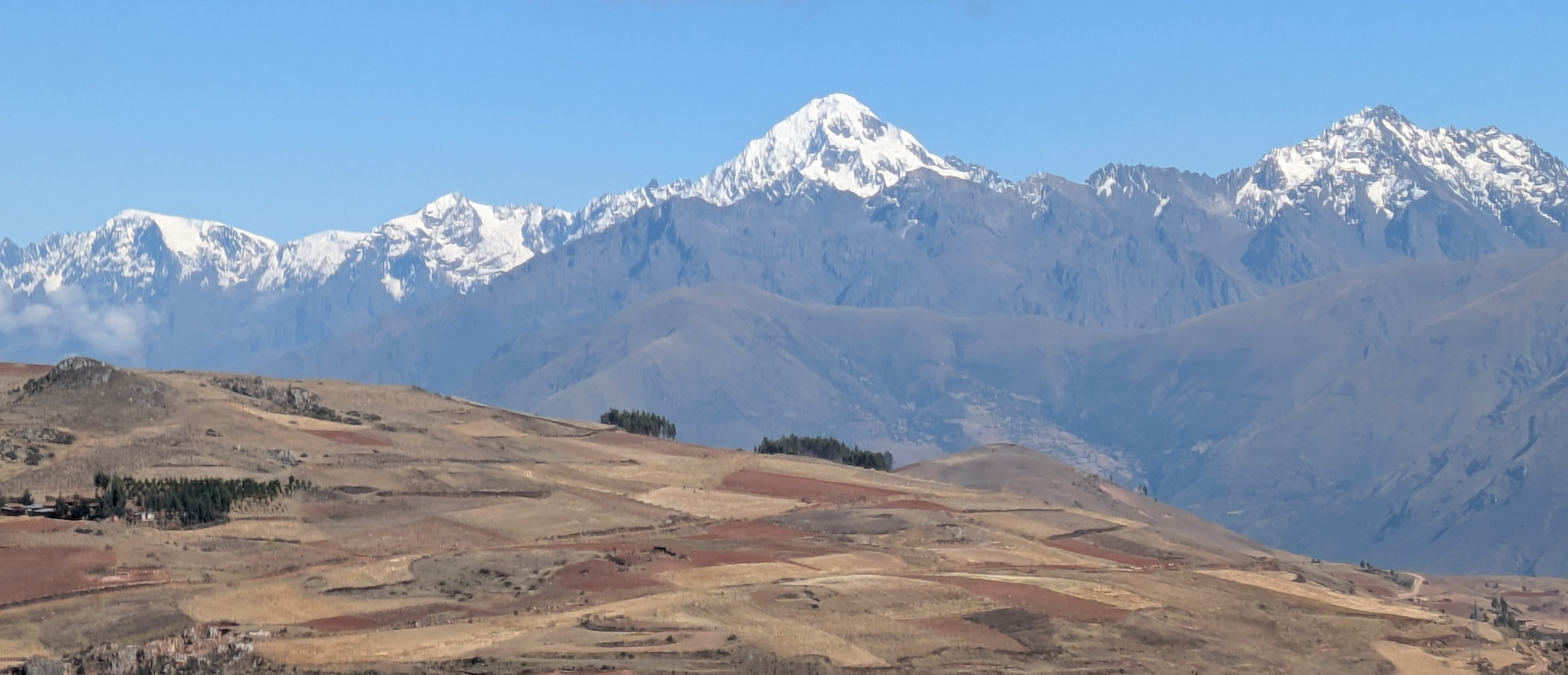
The clouds that have been surrounding the higher mountains in the Andes evaporated today for our first (of many) clear views of the glaciated peaks. The largest one here is named Veronica.
Today, we went to the town of Chinchero for the start of our first real hiking day. We were met by Jesus and his wife and their pack horses and donkey.

We spent the morning hiking up a pathway to a 14,500 foot mountain pass. The pass was marked by two large Inca-era rock structures. As you can see, the terrain is wide-open, arid, shrub and grass at these higher elevations. But, even up here, there are ancient terraces built into the hillsides.
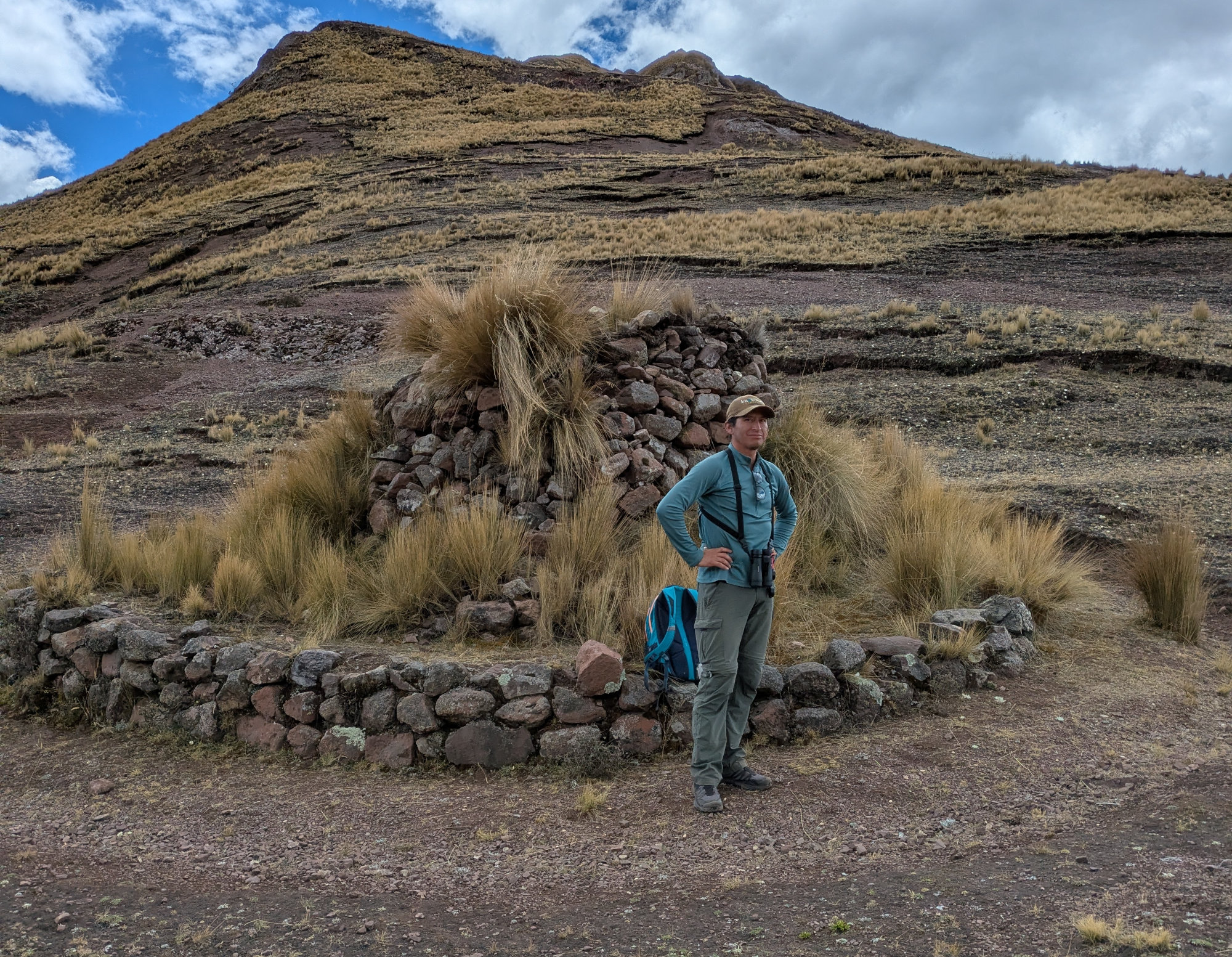


After a restful lunch break at the top, we descended towards the Sacred Valley and explored a magnificent Inca complex high above the valley floor. It is called Sitio Arqueológico de Huchuy Qosqo. Every place we see has its own amazing secrets to ponder.

(A much larger version of this panorama is HERE.)

I don't think I'll ever tire of wondering over the precise shaping and fitting of these stones!
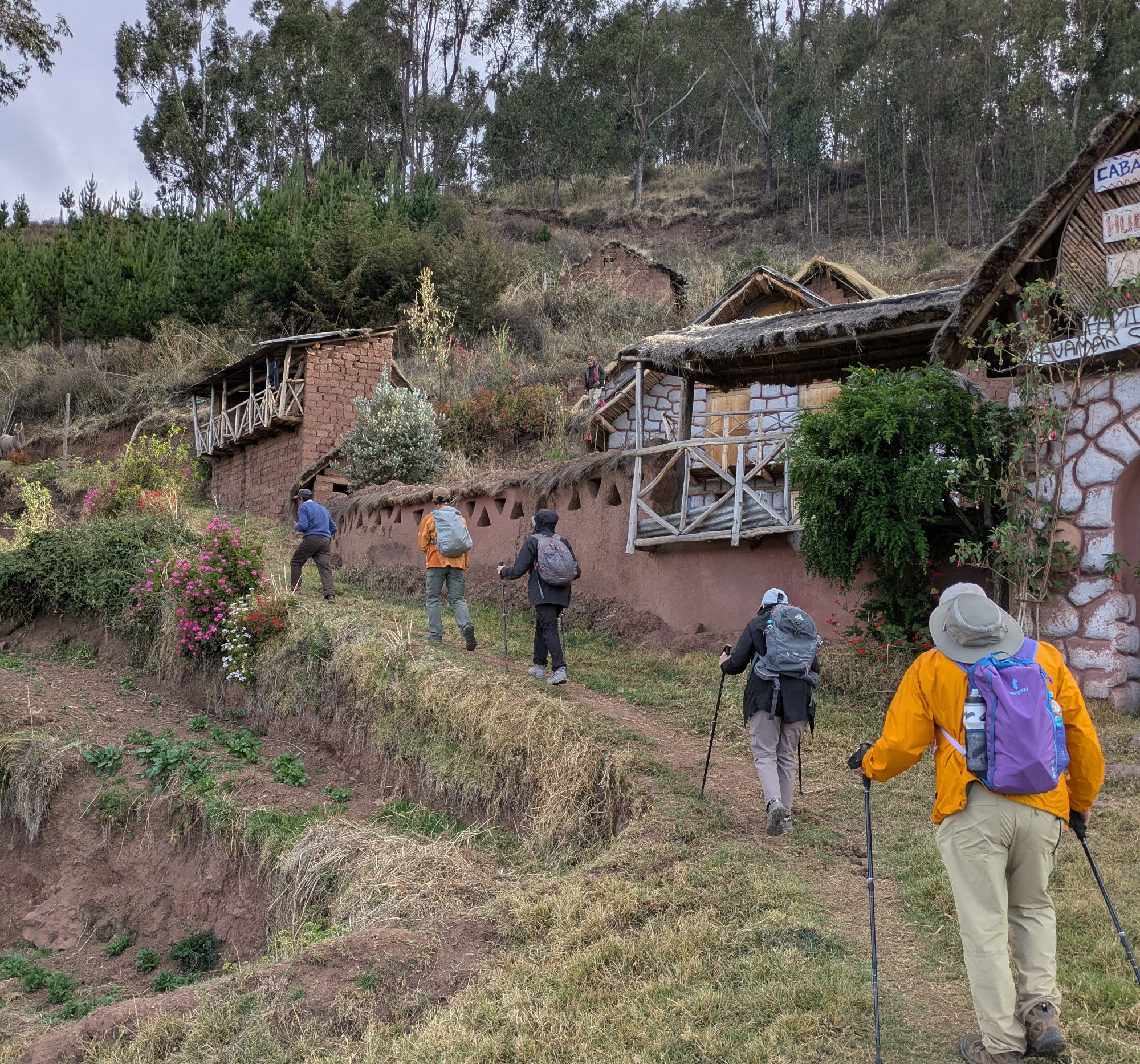
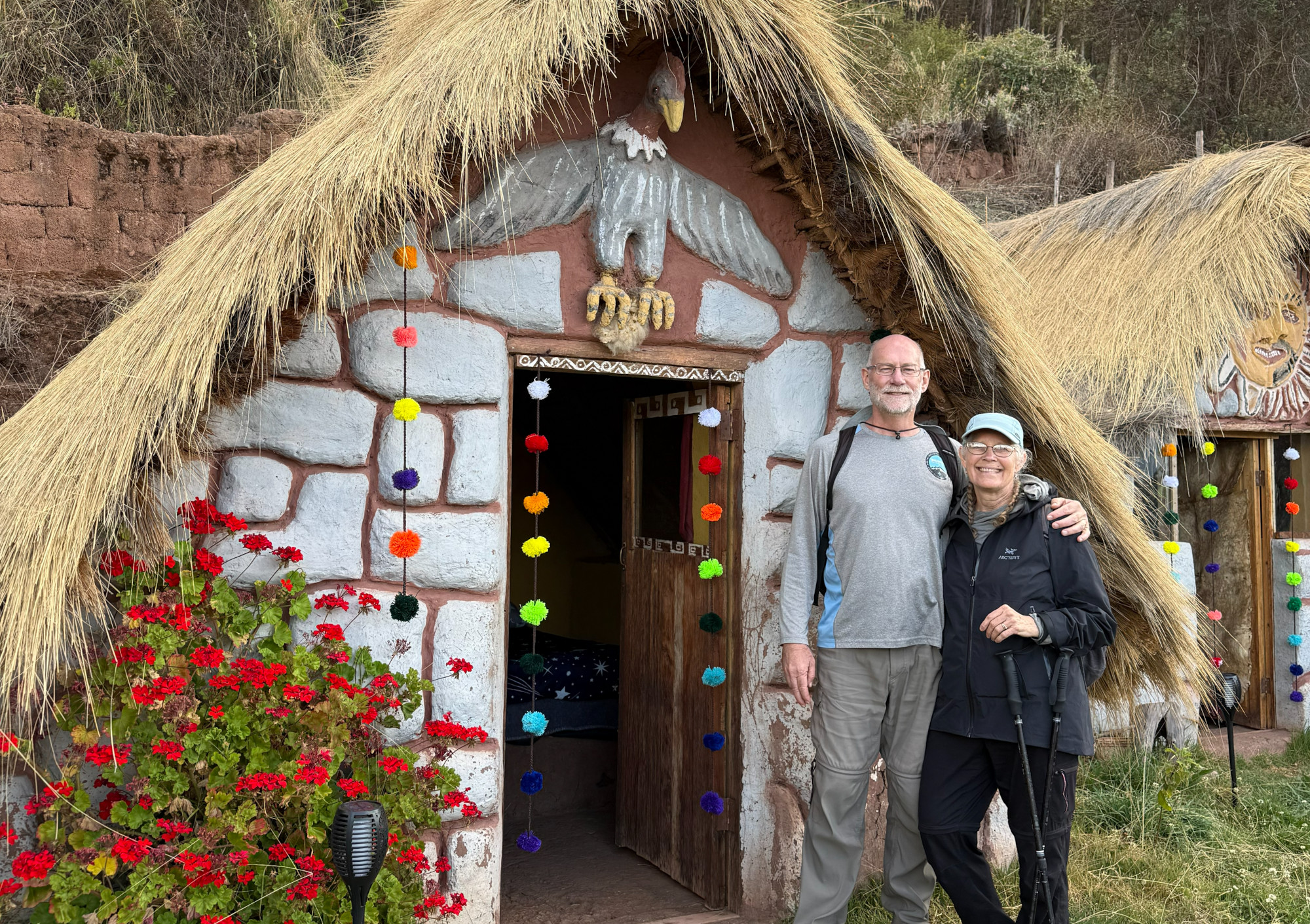
Our day ended with a short, but strenuous walk to Jesus' lodge just around the shoulder of the mountain from the Inca ruins. This is where their family lives and they've built a couple guest sleeping huts - packed clay floors and the bed is made of packed clay as well. It was colder up here than we anticipated, but we stayed fairly warm under 4 or 5 alapaca blankets.
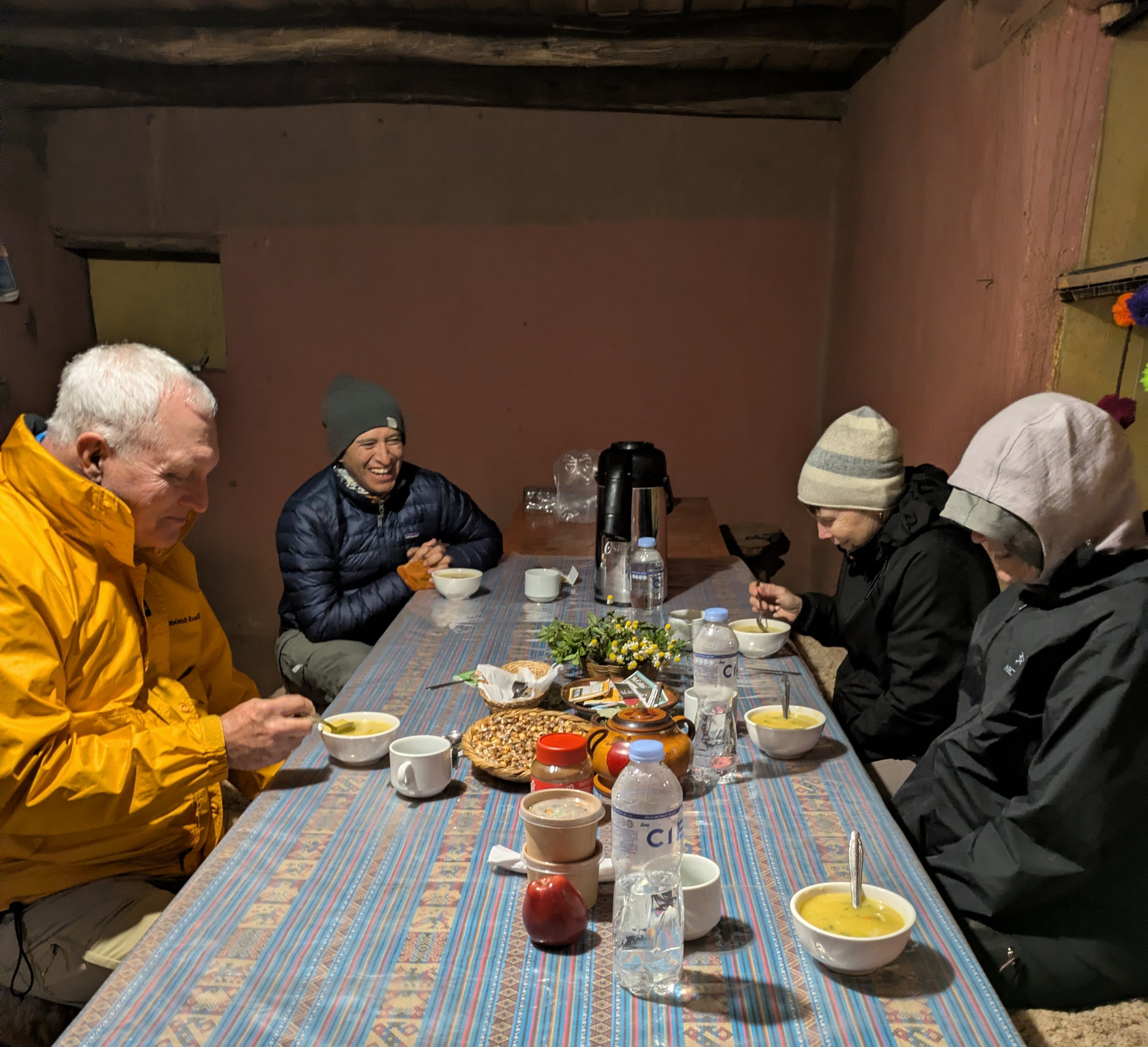
Dinner and breakfast were prepared for us in the family's small, dark kitchen. It was tasty, traditional fare - not the fancy buffets and multi-courses we've gotten spoiled with, but healthy and plenty. (When you get to the end, you can see a sampling of the foods we enjoyed)
Wednesday, Sep 16, 2026
Lodging: Las Qolqas EcoResort

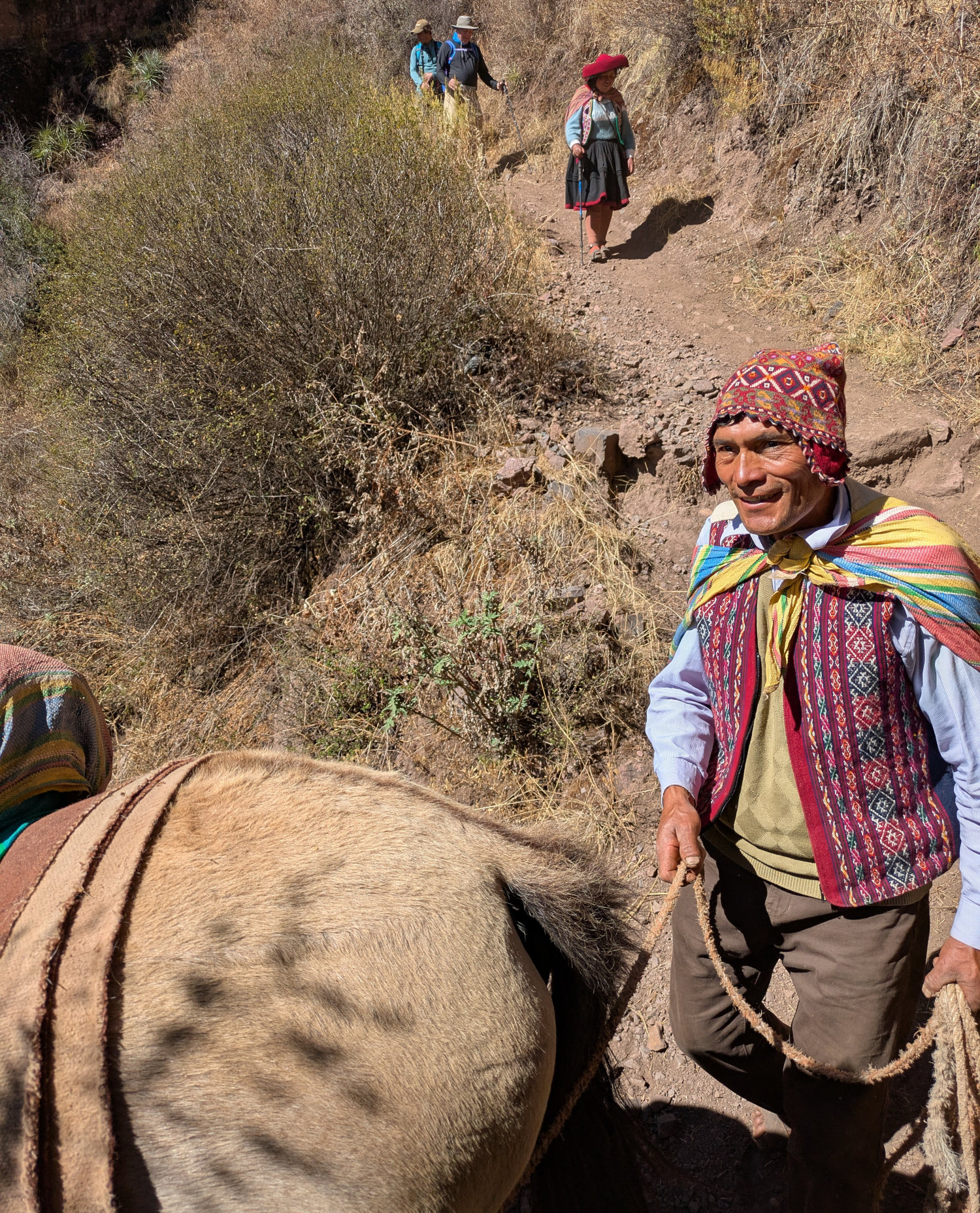
Our morning hike was all downhill, but not fast. We had a 2-hour hike down a very steep path to the Sacred Valley floor where we met up with Mario and the van again. Jesus and his wife walked with us because they needed to get some things in town. Then, they would walk back home - a 4-hour roundtrip hike is just part of life here for many people.


Mario drove us to our next outlandishly lavish lodging near Ollantaytambo. Here, we were treated to watching the preparation of a traditional earth-cooked lunch. Clean rocks are heated, dropped in a hole, food is added, and it is all covered for about an hour.
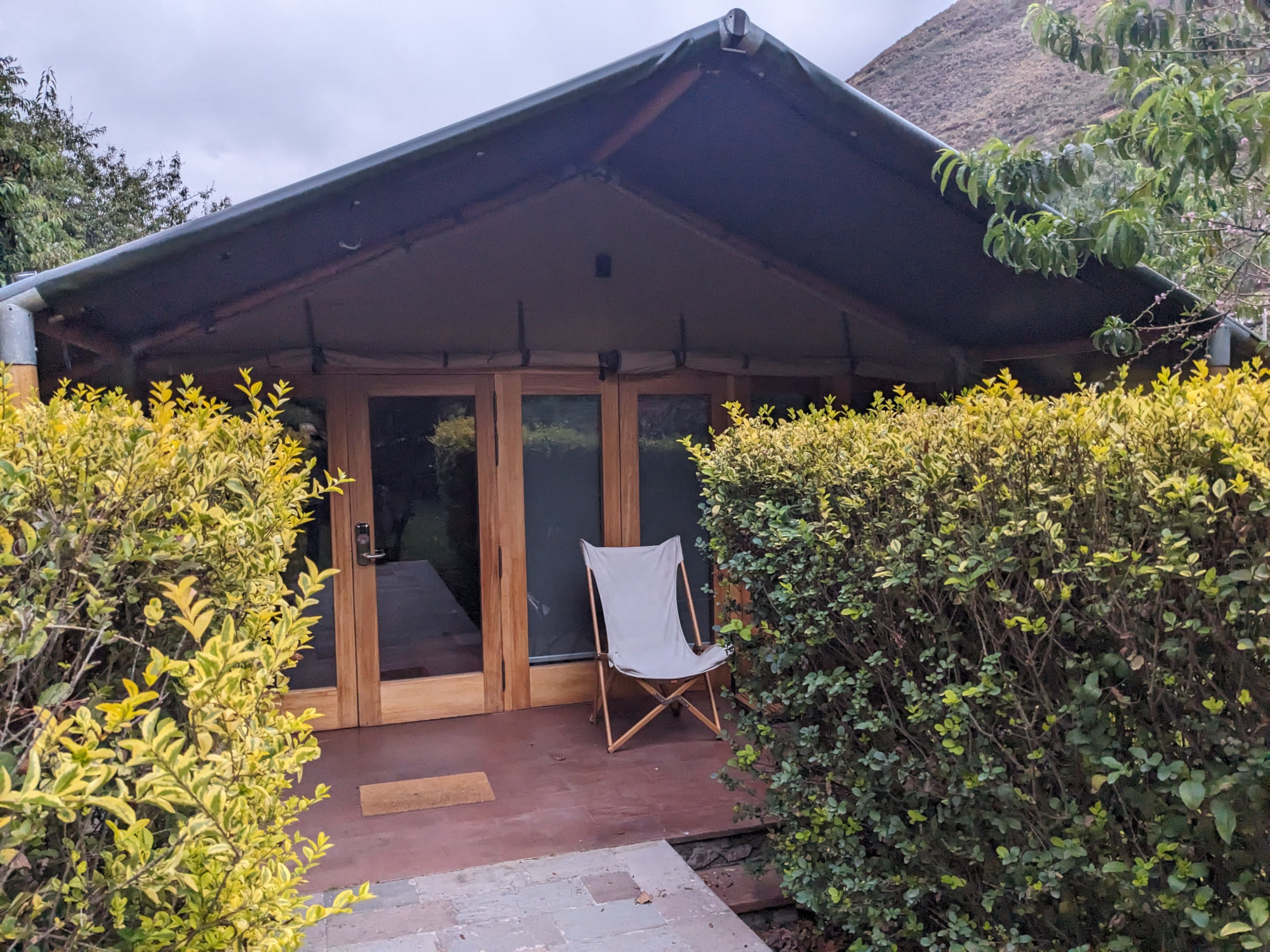
The late afternoon and evening were just spent relaxing around the lodge. Our home for the night is 'glamping' I guess - it's partially canvas, so you could call it a tent, but it's more like a summer cabin.
Thursday, Sep 17, 2026
Lodging: Inkaterra Machu Picchu Pueblo hotel

We won't see Mario and the van for a couple days. He drove us to the train station so we could get a ride to the start of the 1-day hike to Machu Picchu with our wonderful guide, Juan Carlos.
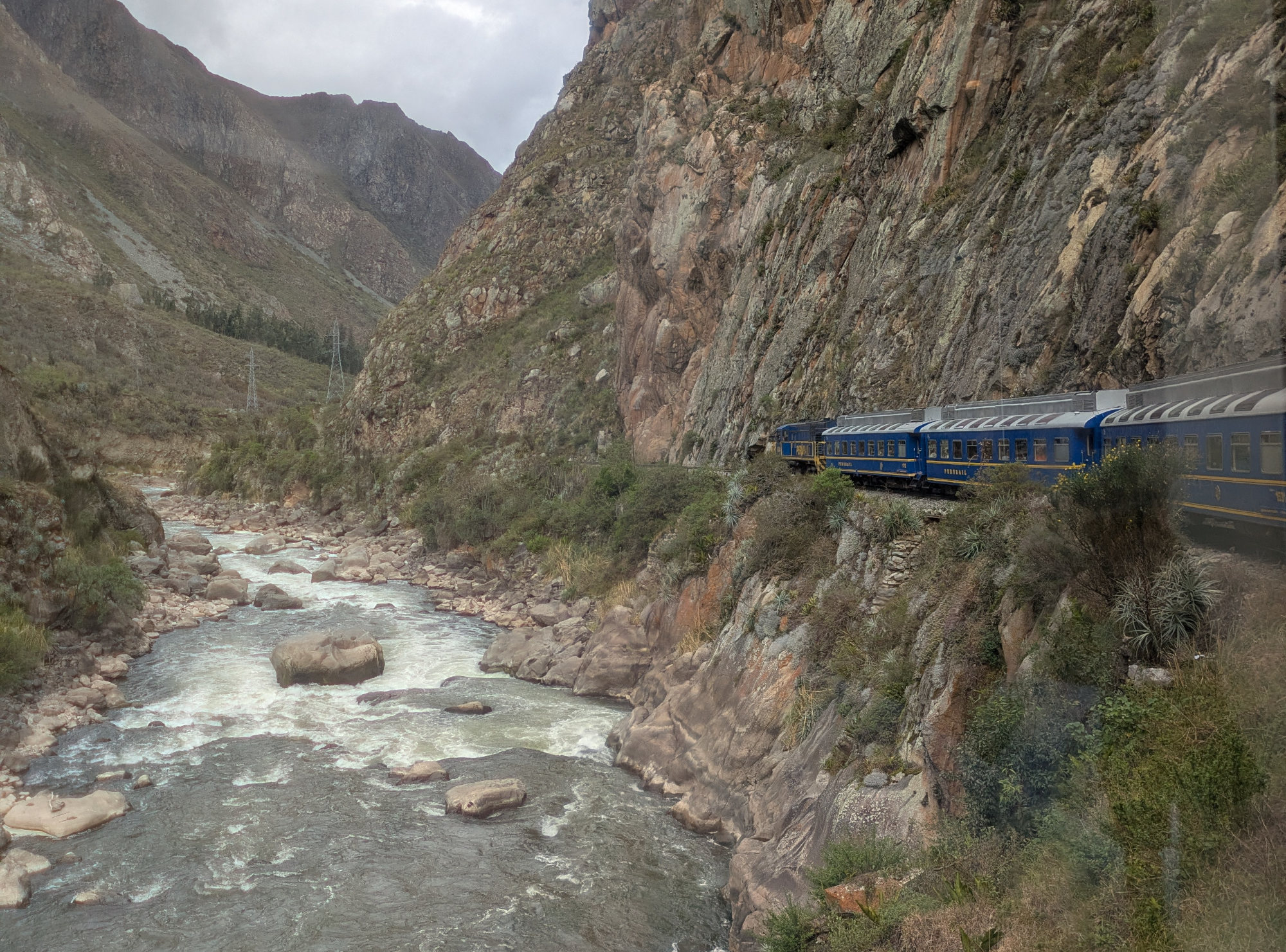
I enjoyed the train ride down the Sacred Valley right along the river, passing many areas of ancient terraces. We passed the spot where folks doing a 5-day trek to Machu Picchu start their adventure, and kept riding along.
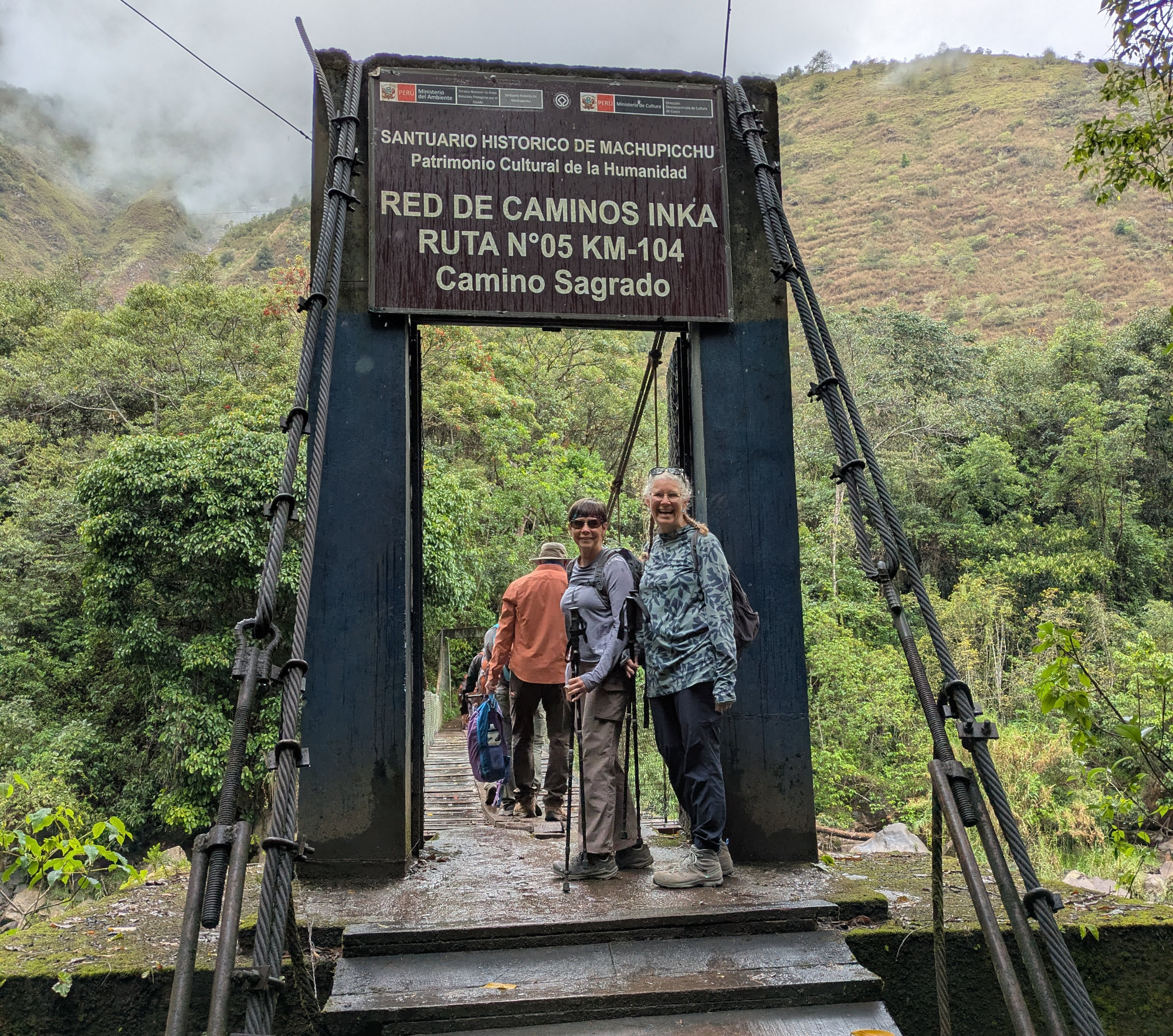
Our 6-hour hike started with a walk bridge over the Urubamba river to the permit station to access the Sacred Path. The forest here was much more like what I expected - lots of vegetation, moisture, and life rather than the dry, sparce land we'd been exploring. We are about 3,000 feet lower here, so that makes sense.

Once on the trail, we immediately passed ruins in the narrow valley.

The trail gradually breaks out of trees onto an open mountainside with views up and down the valley. The narrow path cut and built into the hillside is in great shape and continually gains elevation as it climbs higher and higher and the river drops lower and lower. There is an interesting hydropower station far below where much of the river is diverted through a tunnel blasted through the mountain to emerge on the other side 1300 feet lower to turn turbines.
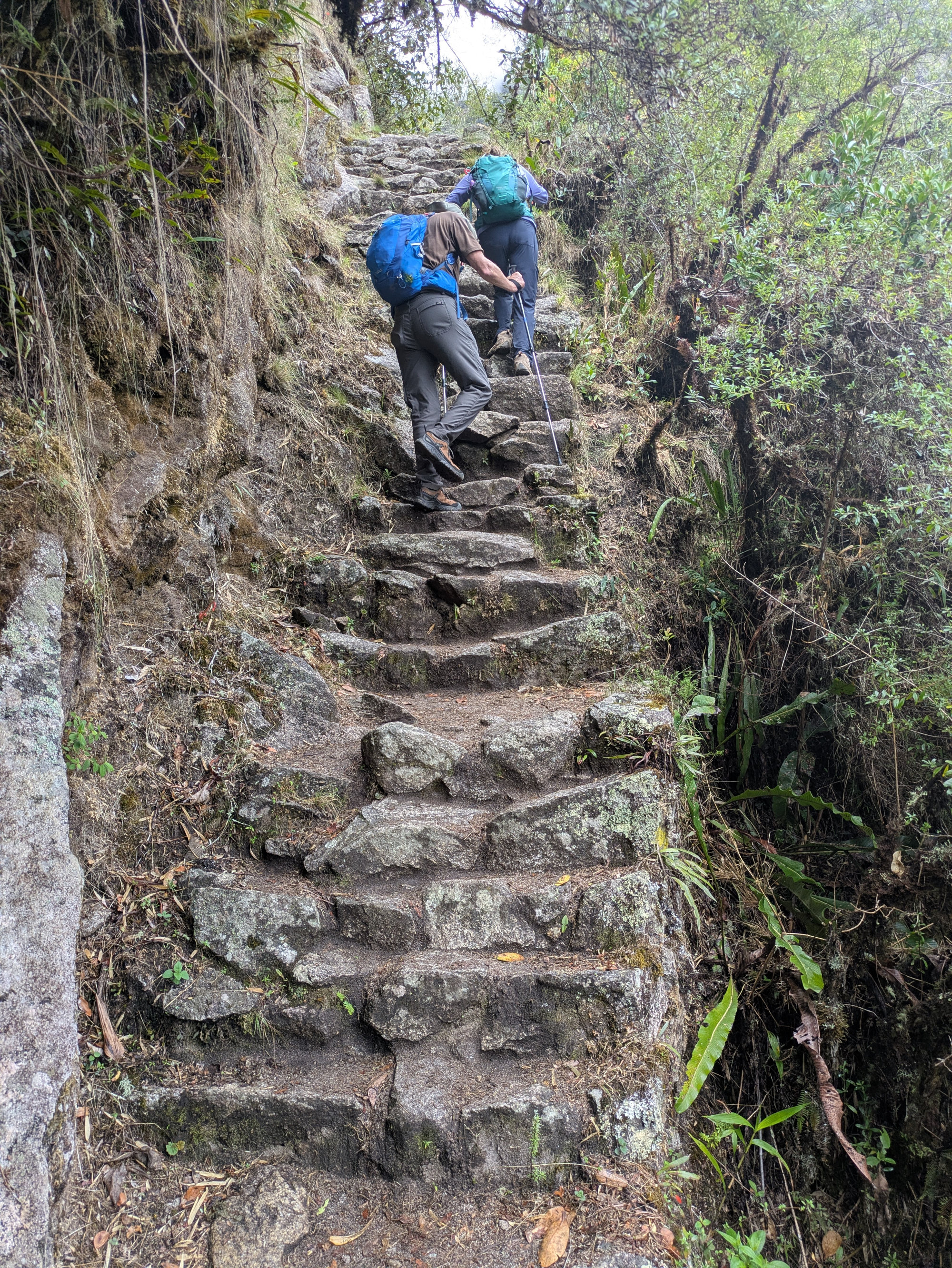
The entire walk was a lot of fun today. There were soooo many steps carved into the solid mountain, or built with rock.
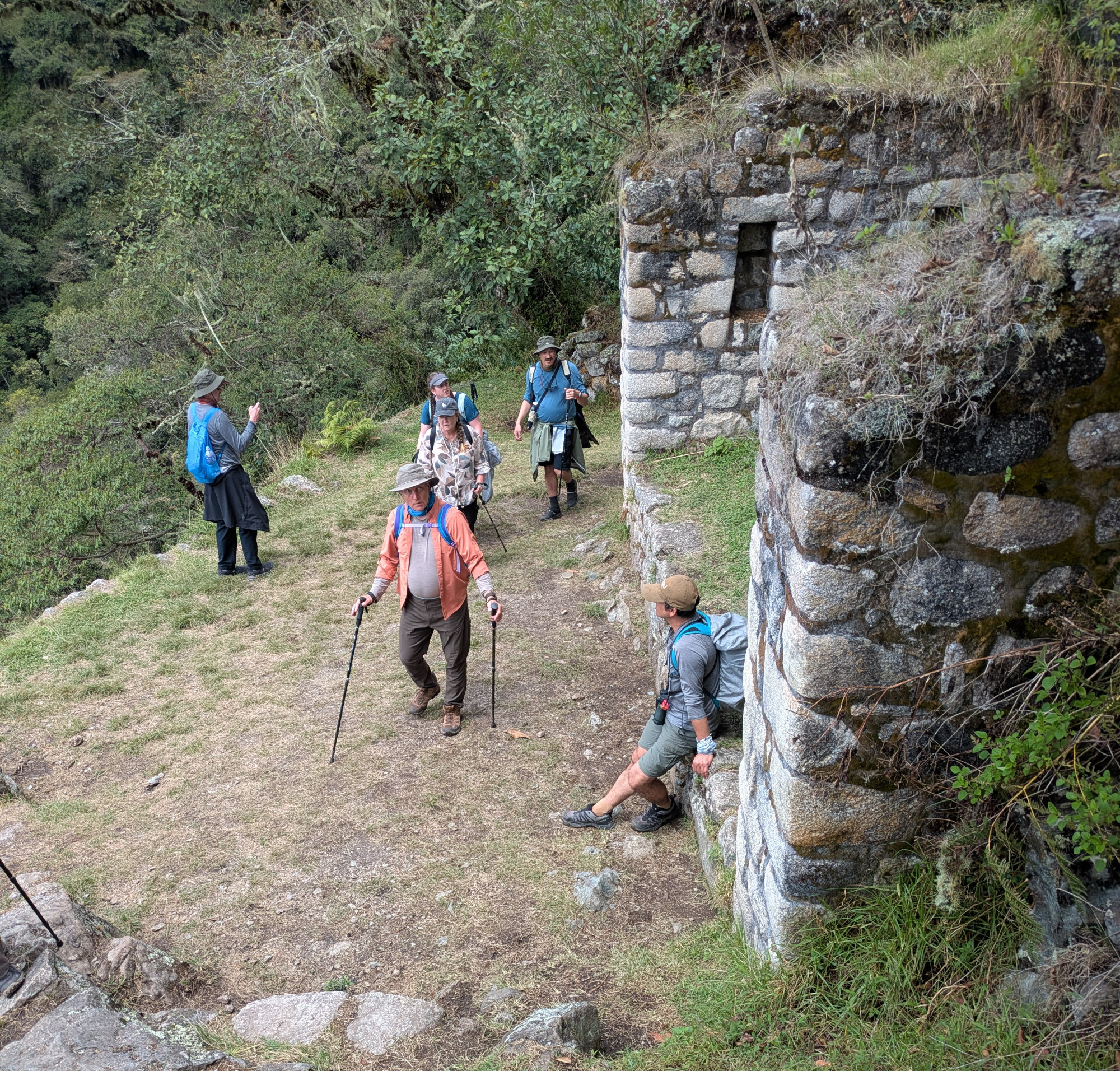
Ancient rest stops along the way.

A massive complex of terraces and buildings, with llamas, long before we reached Machu Picchu.
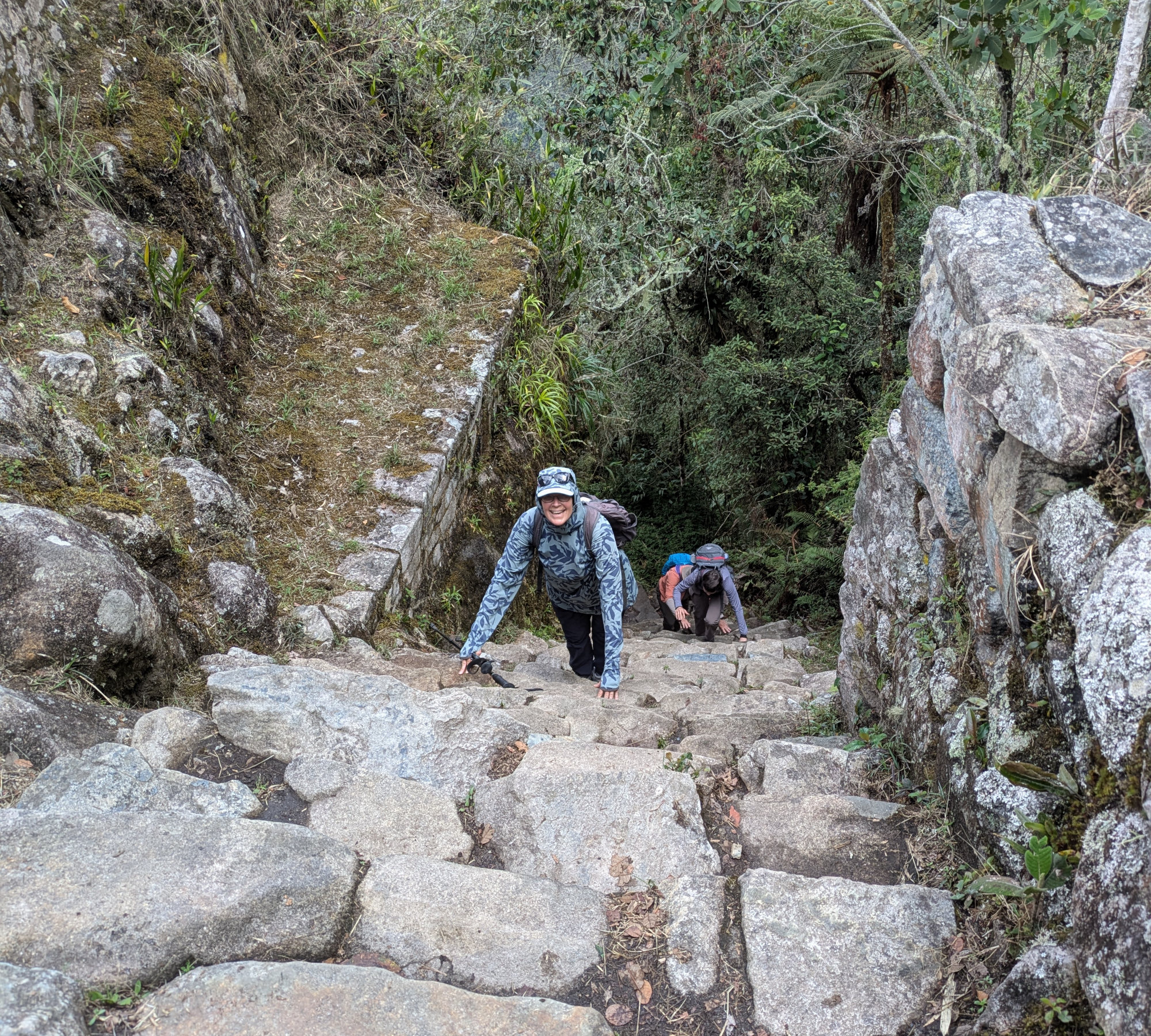
The famous "Monkey Steps" - long set of very steep rock steps near the end of the day's climb. They're easier to scramble up using hands and feet.

Inti Punku - The Sun Gate - the first view of Machu Picchu and the end of the long climb. It's still a mile to Machu Picchu, but it's all a nice, gentle, downhill walk on a wide rock path.

Machu Picchu was drizzly when we arrived, so we didn't stay long. We will be back early in the morning to spend more time exploring the complex. The bus ride down the very windy road to Machu Picchu town (actually named Aguas Calientes) was fun - kind of. You really have to trust the bus drivers.

A short walk through town from the bus stop got us to the Inkaterra Pueblo hotel - another super lux lodging with extravagant food choices. We just chilled for the evening, looking forward to a sunnier day at Machu Picchu tomorrow.
Friday, Sep 18, 2026
Lodging: Inkaterra Machu Picchu Pueblo hotel
After another indulgent breakfast, we were back in a bus for a serpentine ride up to Machu Picchu. There are a fleet of buses making the 1-hour round trip all day long, so rides move right along.

The day was no sunnier than yesterday, but at least it's not raining. And, there seems to be fewer people since we're here early.


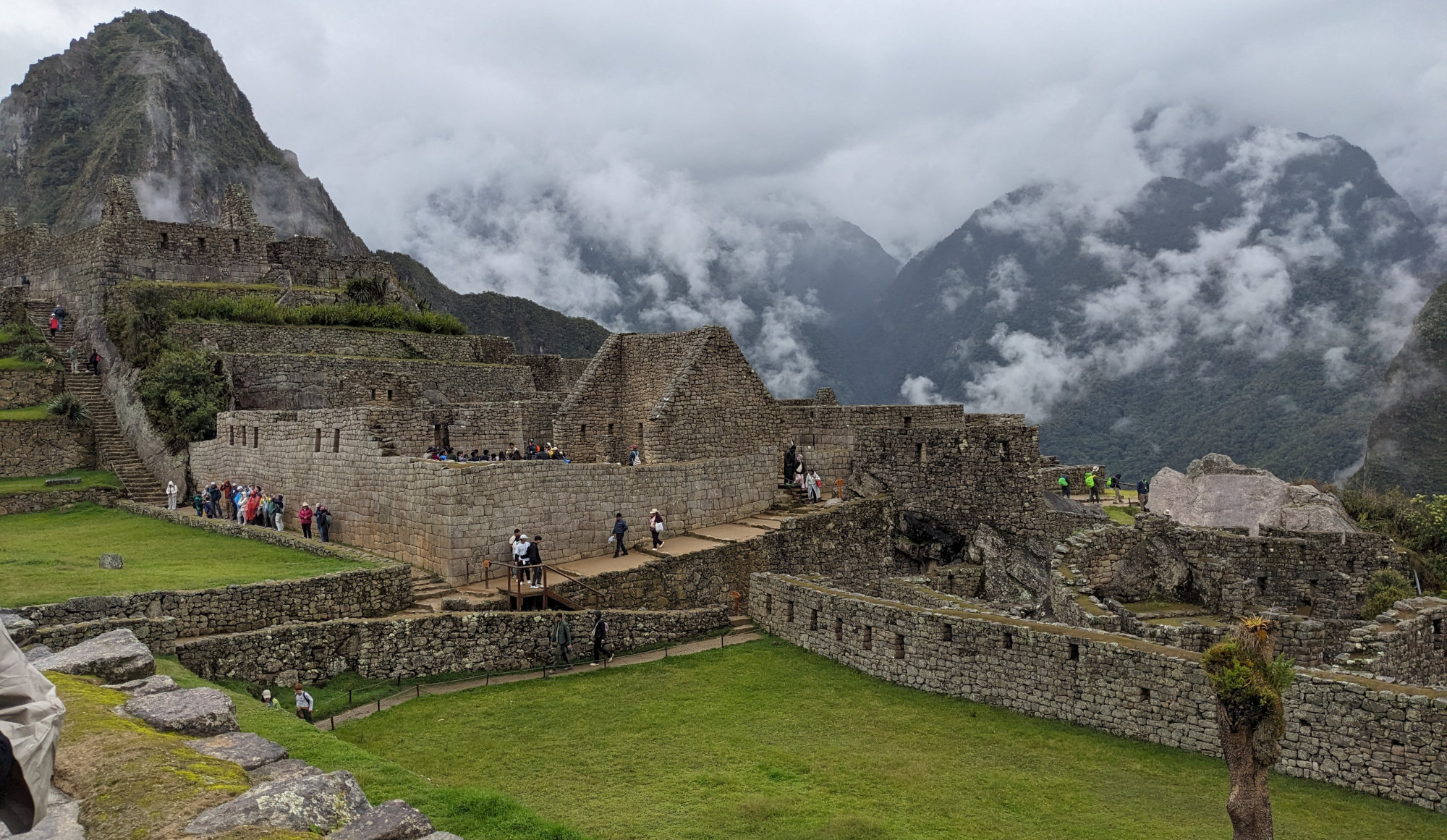
We spent an hour walking through the ruins, admiring the construction, and watching llamas play.

The climb up and down Waynapicchu (Huayna Picchu) took about 2 hours. Even though it was short, it was probably the most "injury probable" trail I've been on. Much of the trail was very narrow, very steep, tiny steps, open drop-offs, and wonderful views across the valley. (That is the Urubamba River 1,650 feet below in the photo above)
The most worrisome part was all the other people on the trail, but we had a great time.
These are my size 13 shoes barely fitting sideways on a set of steps that seemed to never end. :-)

The best part was this tiny tunnel near the summit, and the view down to Machu Picchu from the summit.
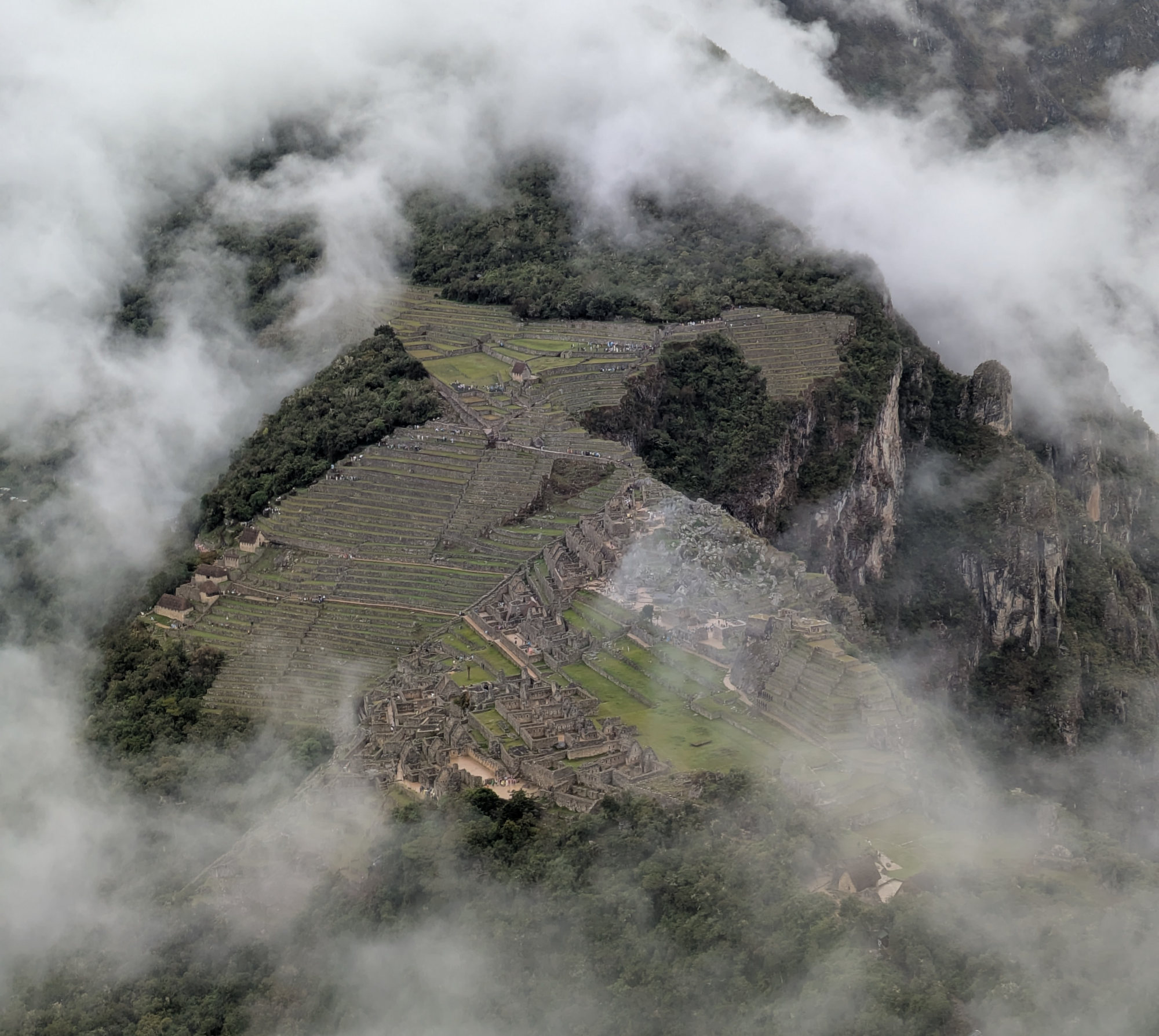
The rock work and construction effort at the top of this small mountain is yet another reason to wonder about How and Why the Inca people did all this. It is simply amazing to see and imagine the people that accomplished it all.
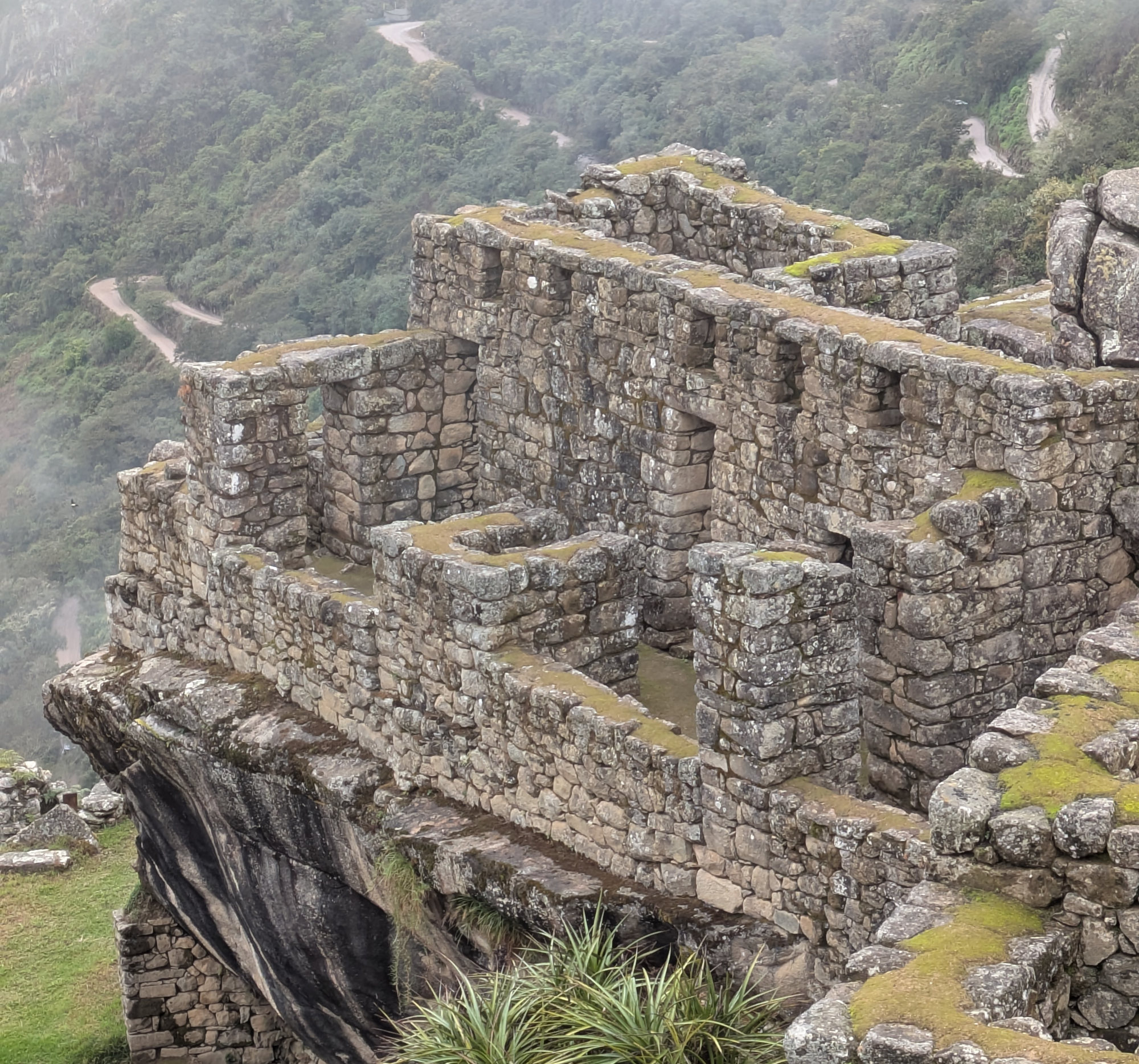
We had another hour to explore the rock work, and this 'house' built right out on a cliff top was a favorite.
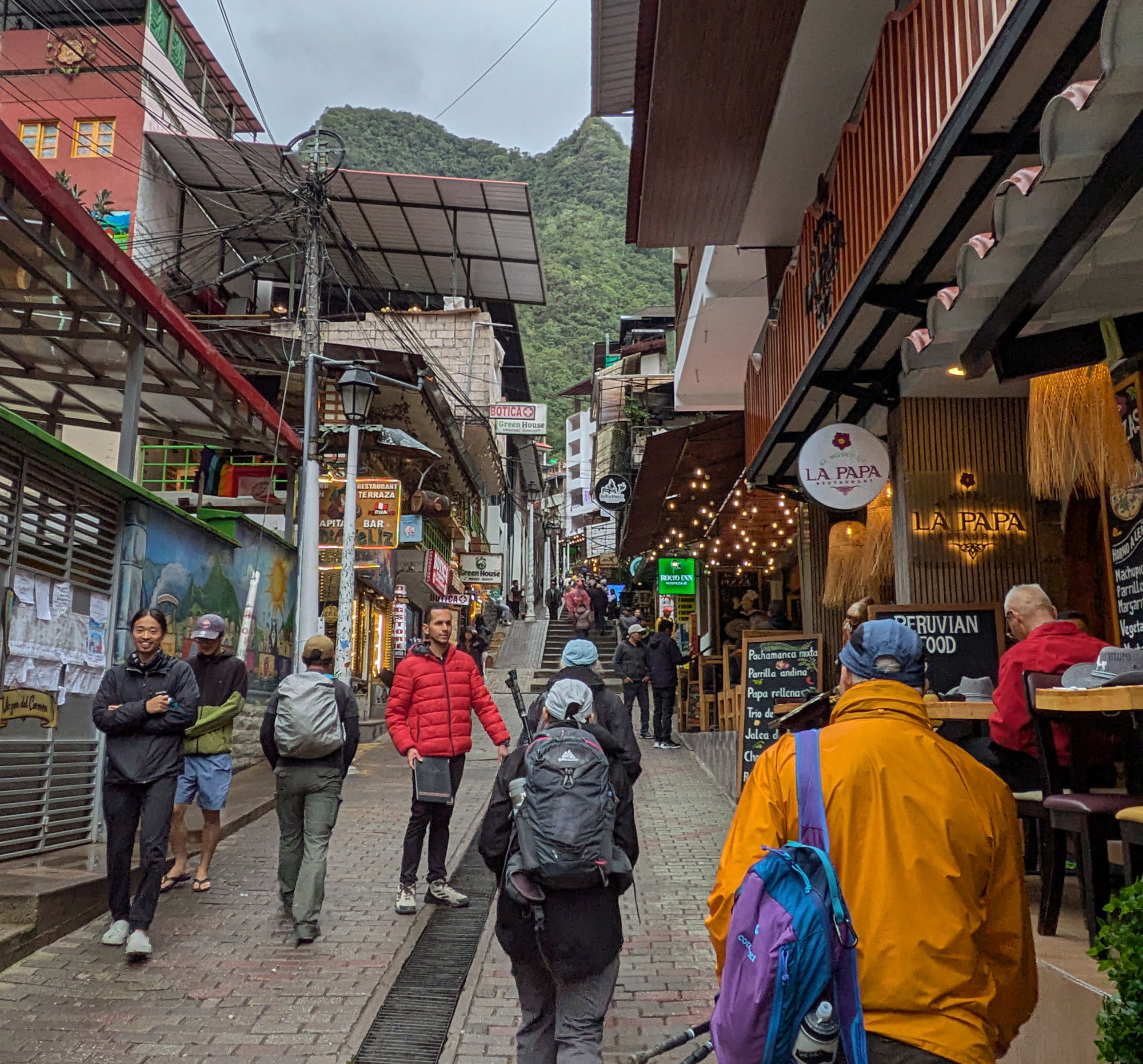
Then we were done with our 3rd wiggly bus ride and back in town by 2:30pm. Aguas Calientes is a bustling place with hundreds of people passing through every day, coming and going to Machu Picchu. Lots of places to eat and tons of souvenir stands. We enjoyed a big lunch at a restaurant in town and then back to the hotel.
Saturday, Sep 19, 2026
Lodging: Antigua Casona San Blas

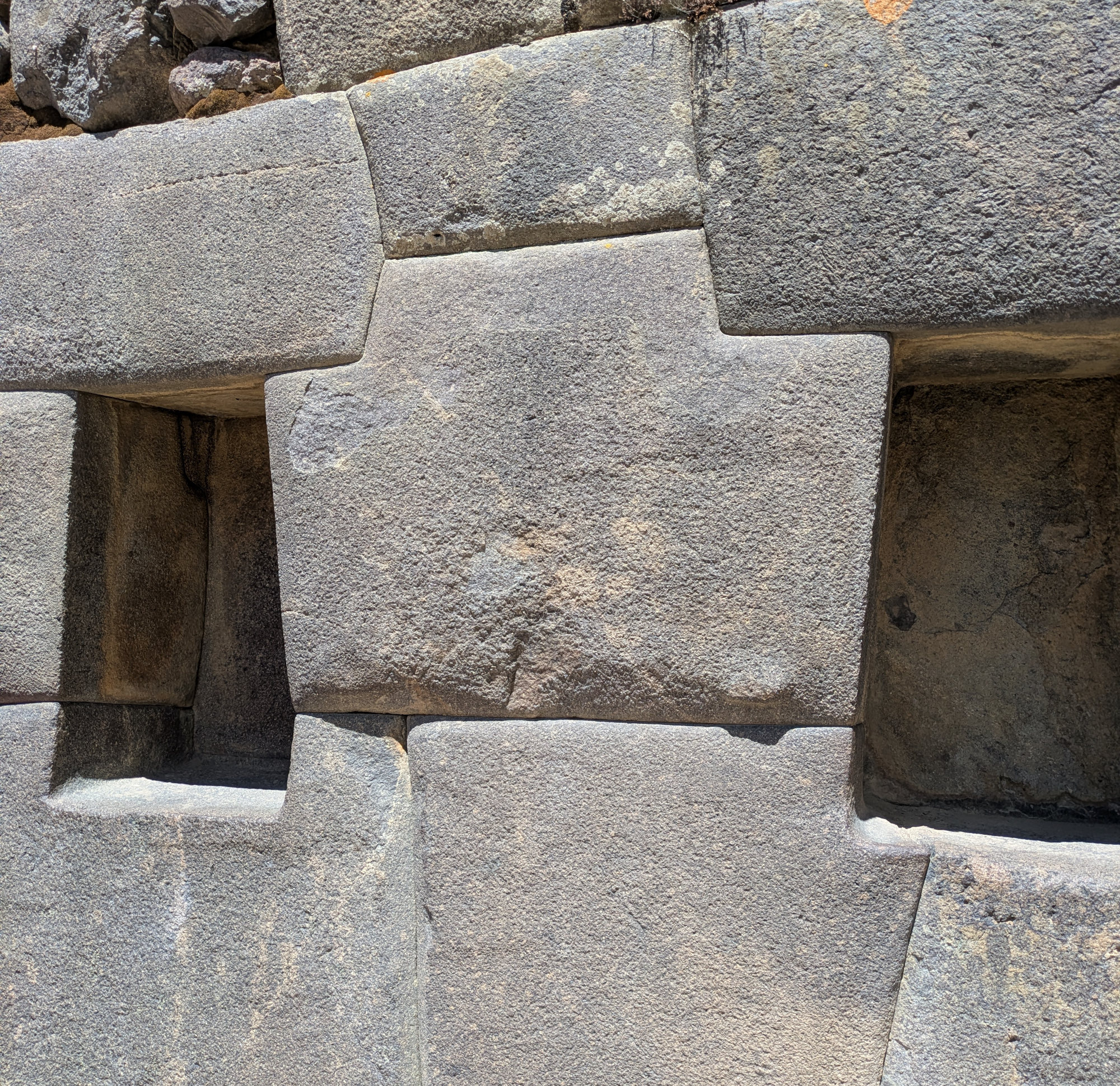
Many wonderful examples of Inca craftsmanship with more huge, perfectly fit stones.
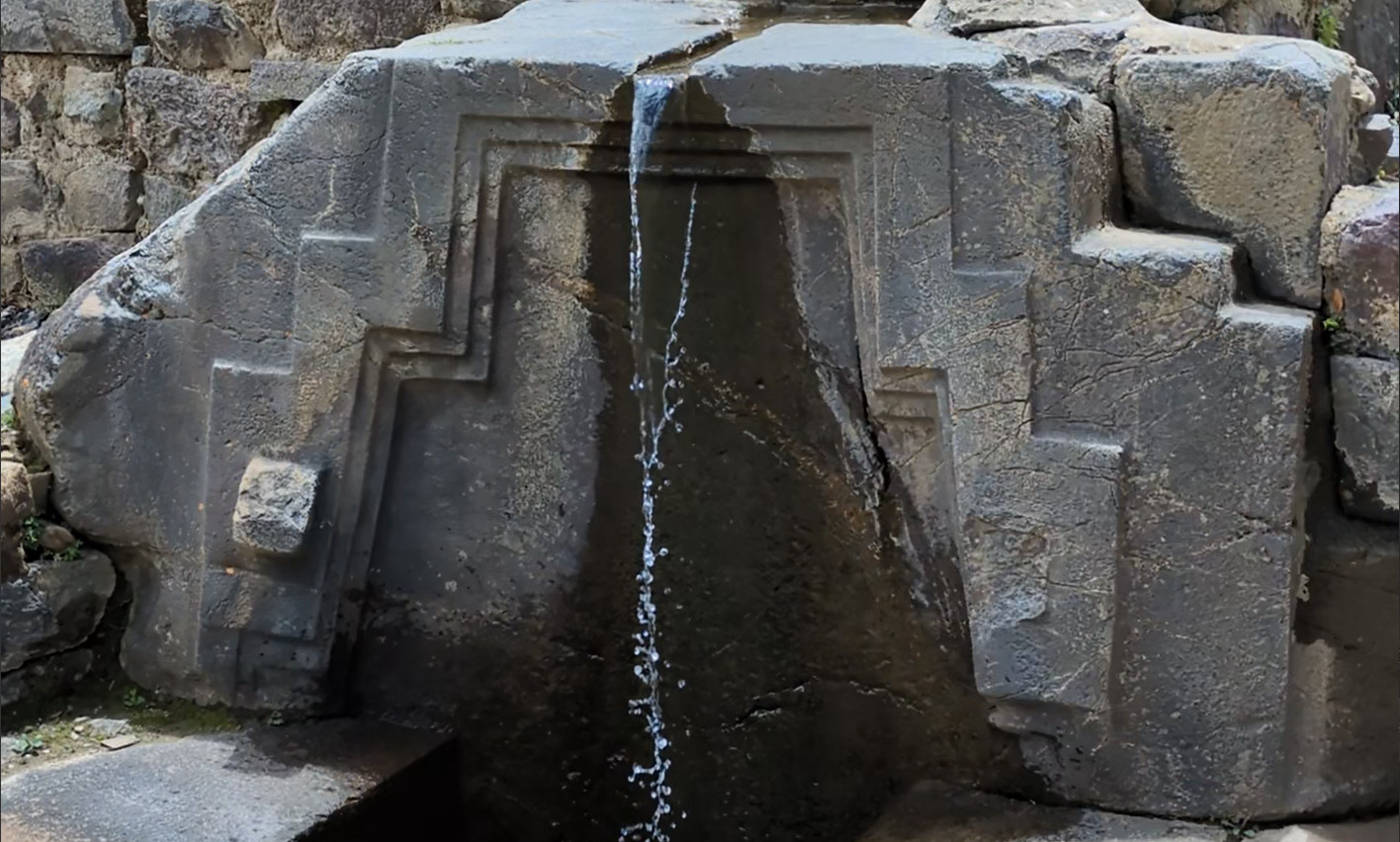
This area also had a garden along a creek with water directed through cut stone to flow into ceremonial pools. Some of the very few artistic carvings on this trip.
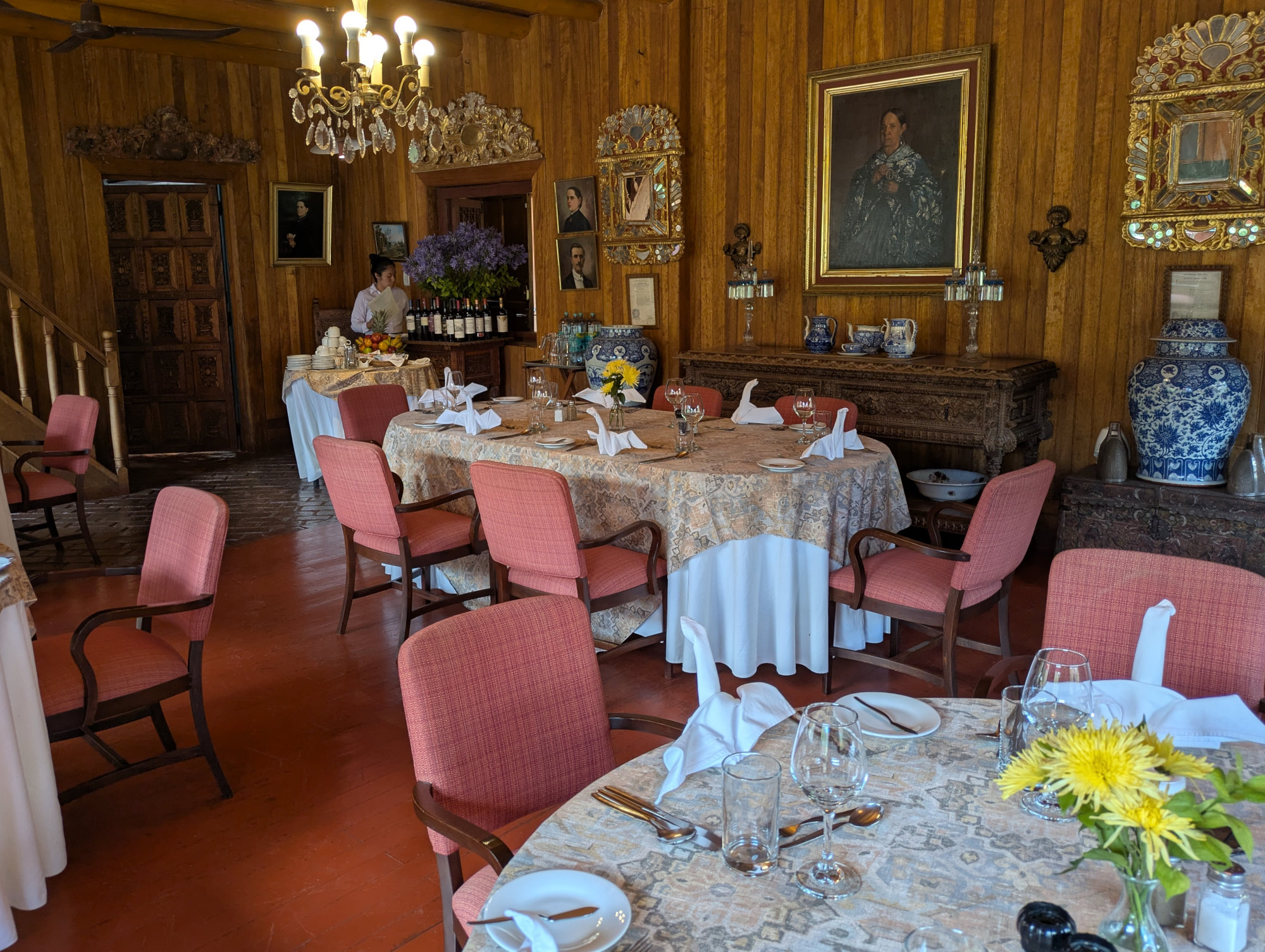
Today's fancy lunch was at a private estate that has been turned into a restaurant and museum. The family has acquired many, many historic artifacts that are on display. According to our guide, private parties must make their collections available to public viewing. I bet there's some stories about just how all these items were acquired in the past.
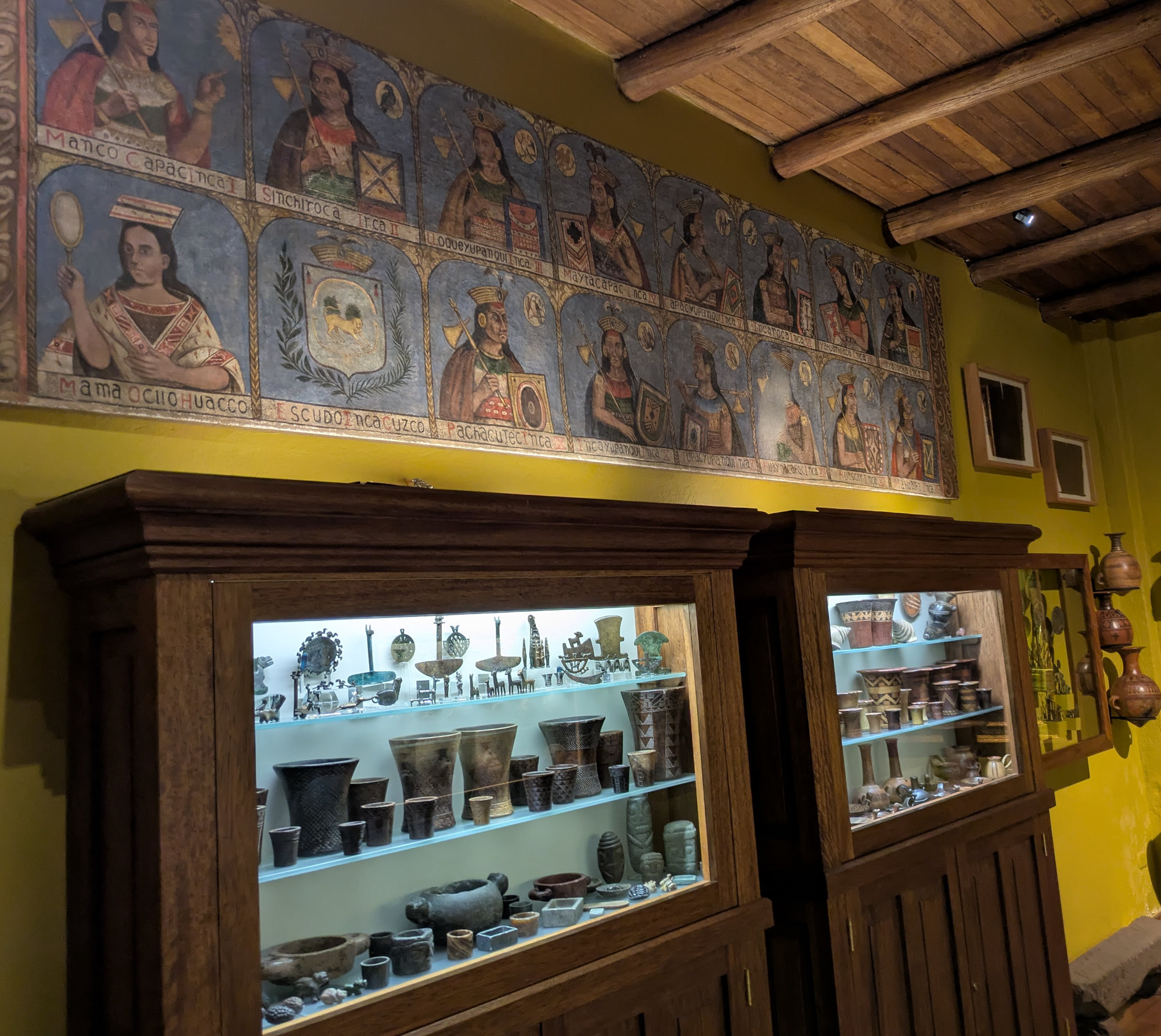
The banner above shows all the emperors of the Inca empire.
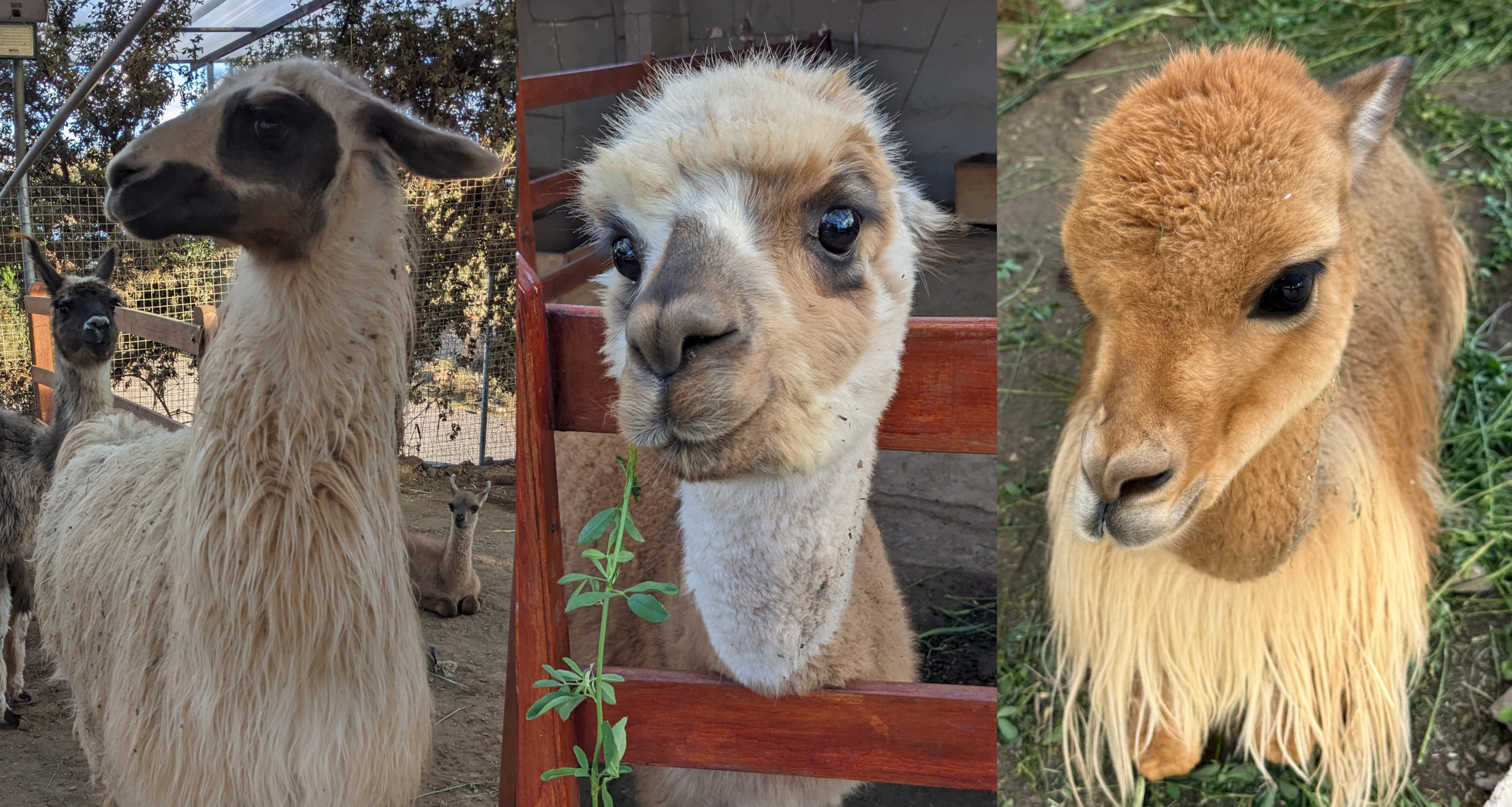
After lunch, Mario whisked us up the valley, over the mountains, and back to Cusco. On the outskirts of Cusco, we stopped at an alpaca/llama/vicuna store and 'petting zoo'. We got to feed the animals, learn a bit about them, and then hopefully purchase some clothing inside. Each animal seemed to have a personality - some agressive, others looking for attention, and some aloof.

We were delivered to our Cusco hotel around 5:00pm. The Antigua Casona San Blas was yet another wonderful place. This one was only a few blocks from Cusco's historic plaza. We walked around a bit in the evening to get used to the neighborhood.
The streets are a bit smaller here than what we are used to. :-)
Sunday, Sep 20, 2026
Lodging: Antigua Casona San Blas
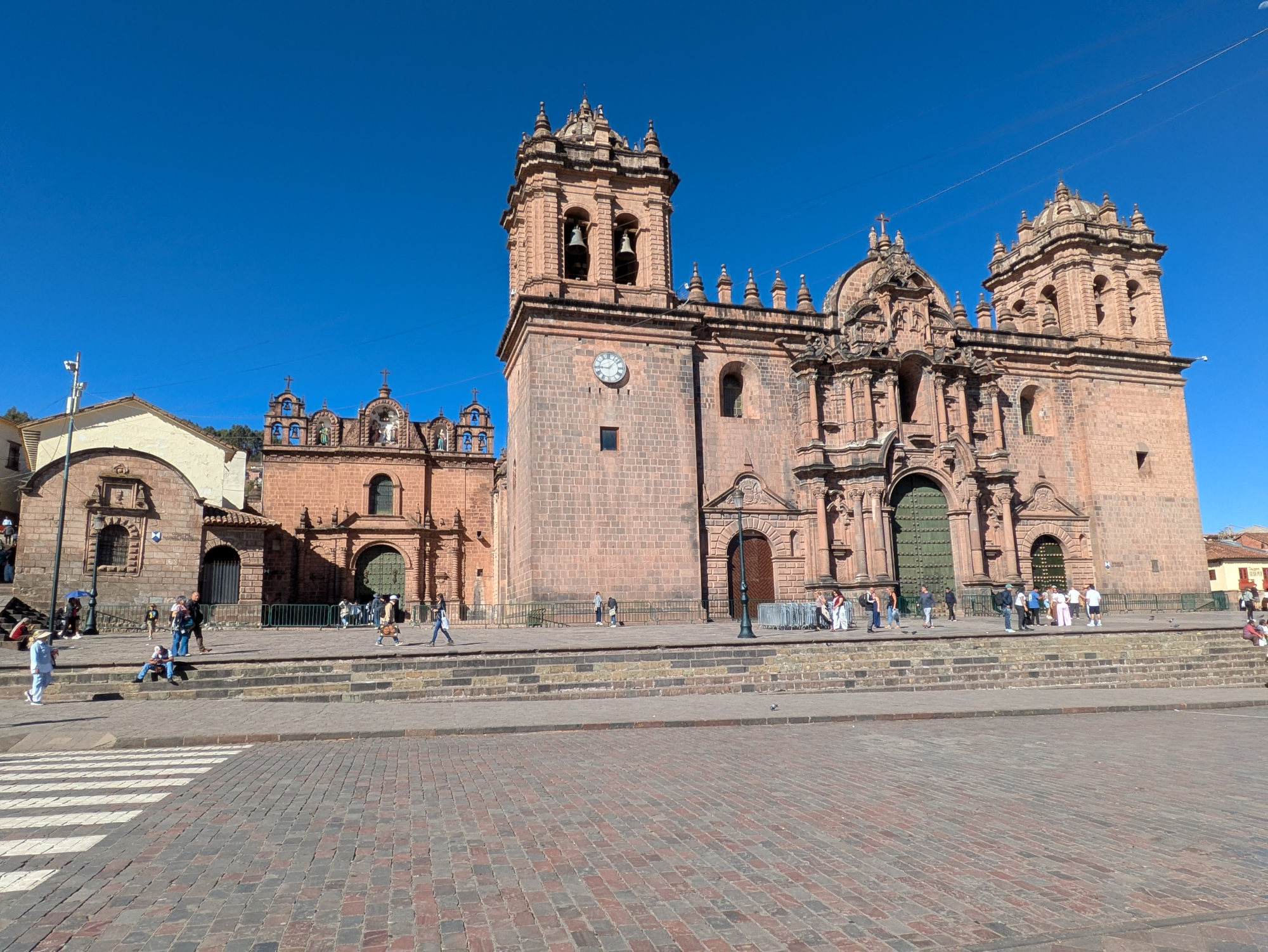

We were treated to a large gathering in the plaza with many marching bands, military units, and political dignitaries. From what we could tell, it appeared to be a celebration of graduates from the schools and universities in the city - small groups with banners showing their graduation year marched/walked past the important people. This went on for at least 3 hours, but we didn't watch it all that time :-)
Monday, Sep 21, 2026
Lodging: Tambopata Research Center
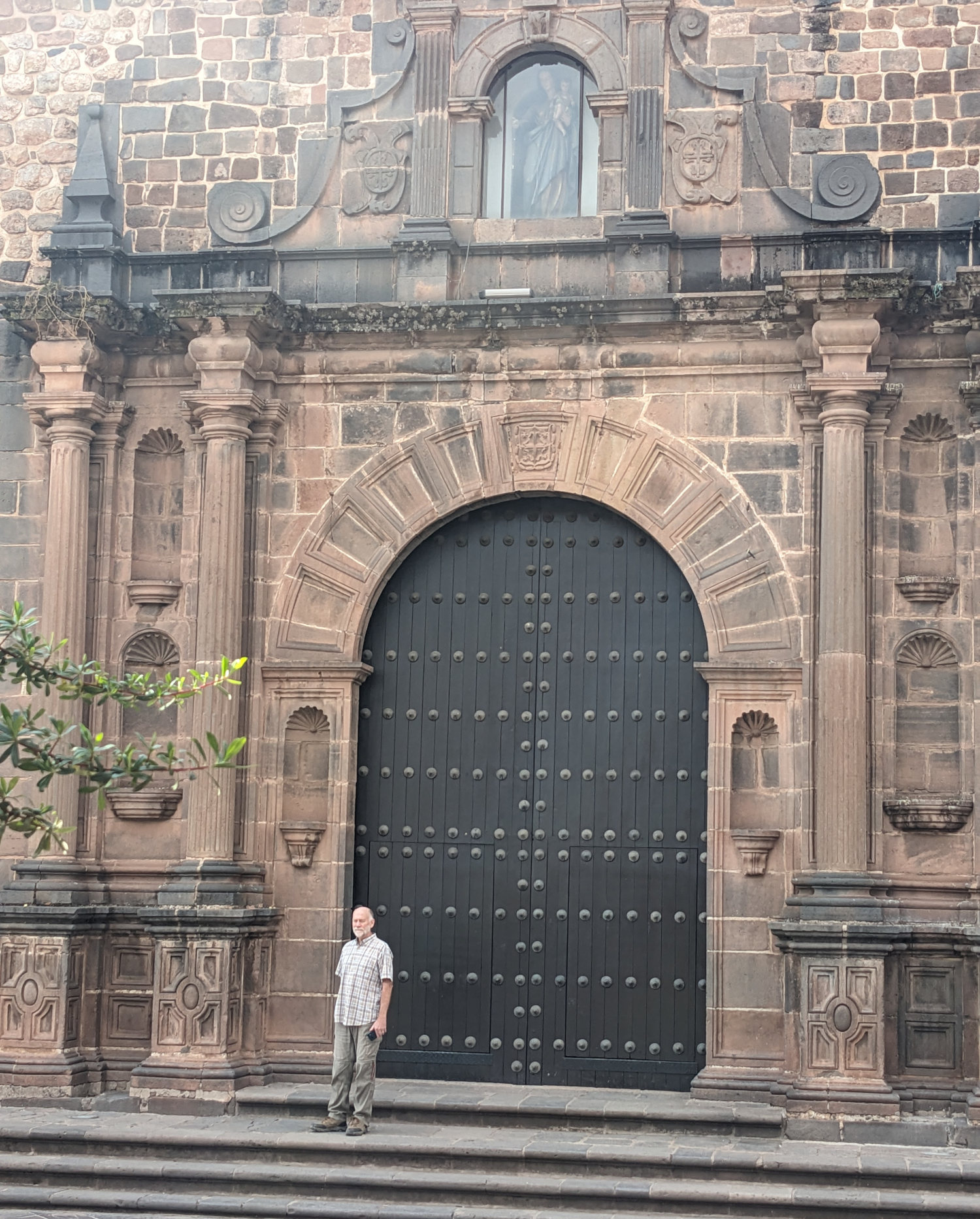

The short plane ride to Puerto Maldonado was uneventful, except for the many, many smoke plumes scattered across the forest below us, and the river of mud winding its way along. Much of the land is being burned to open it for agriculture, and gold mining increases the water turbidity on top of natural run-off from higher upstream. :-(
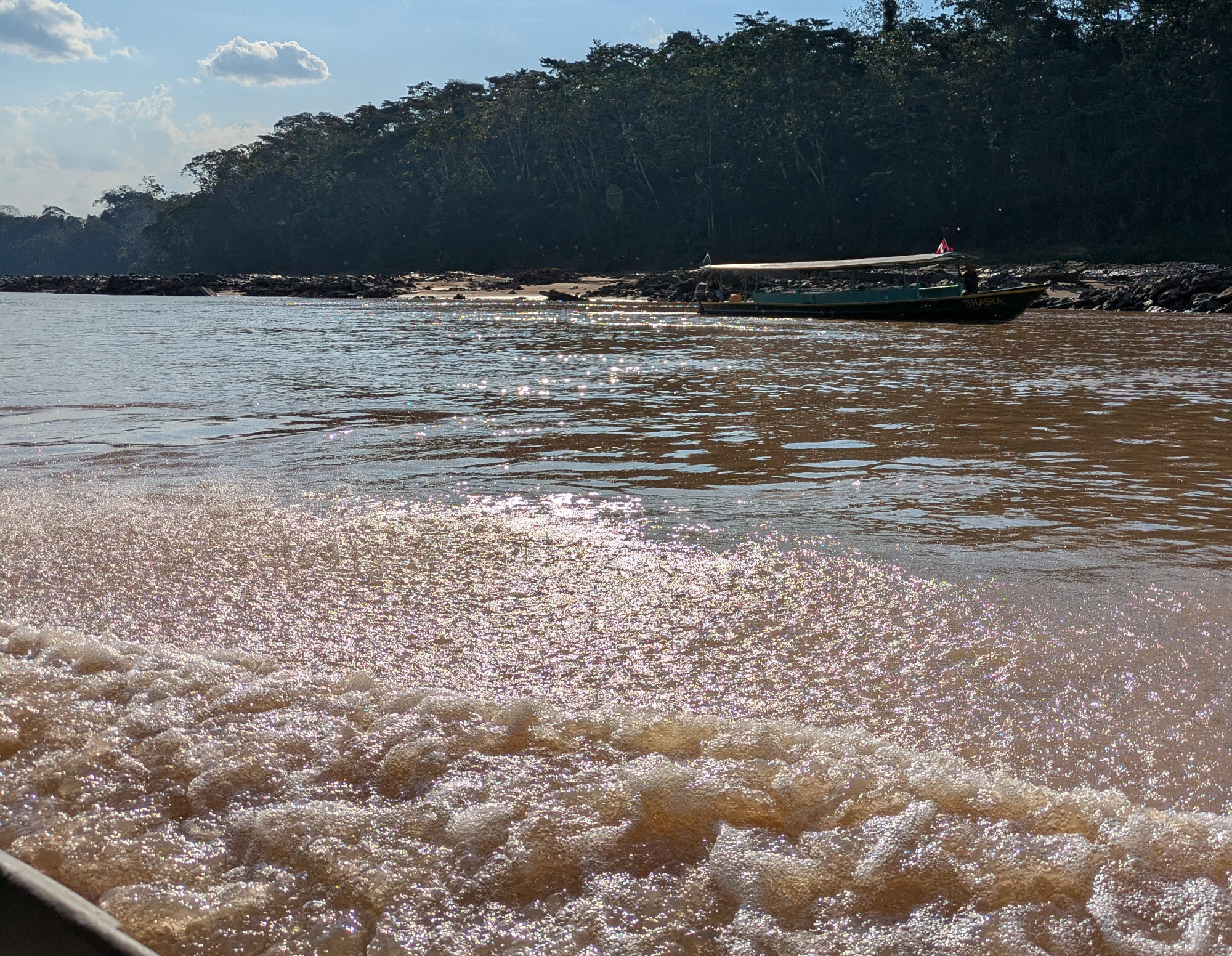
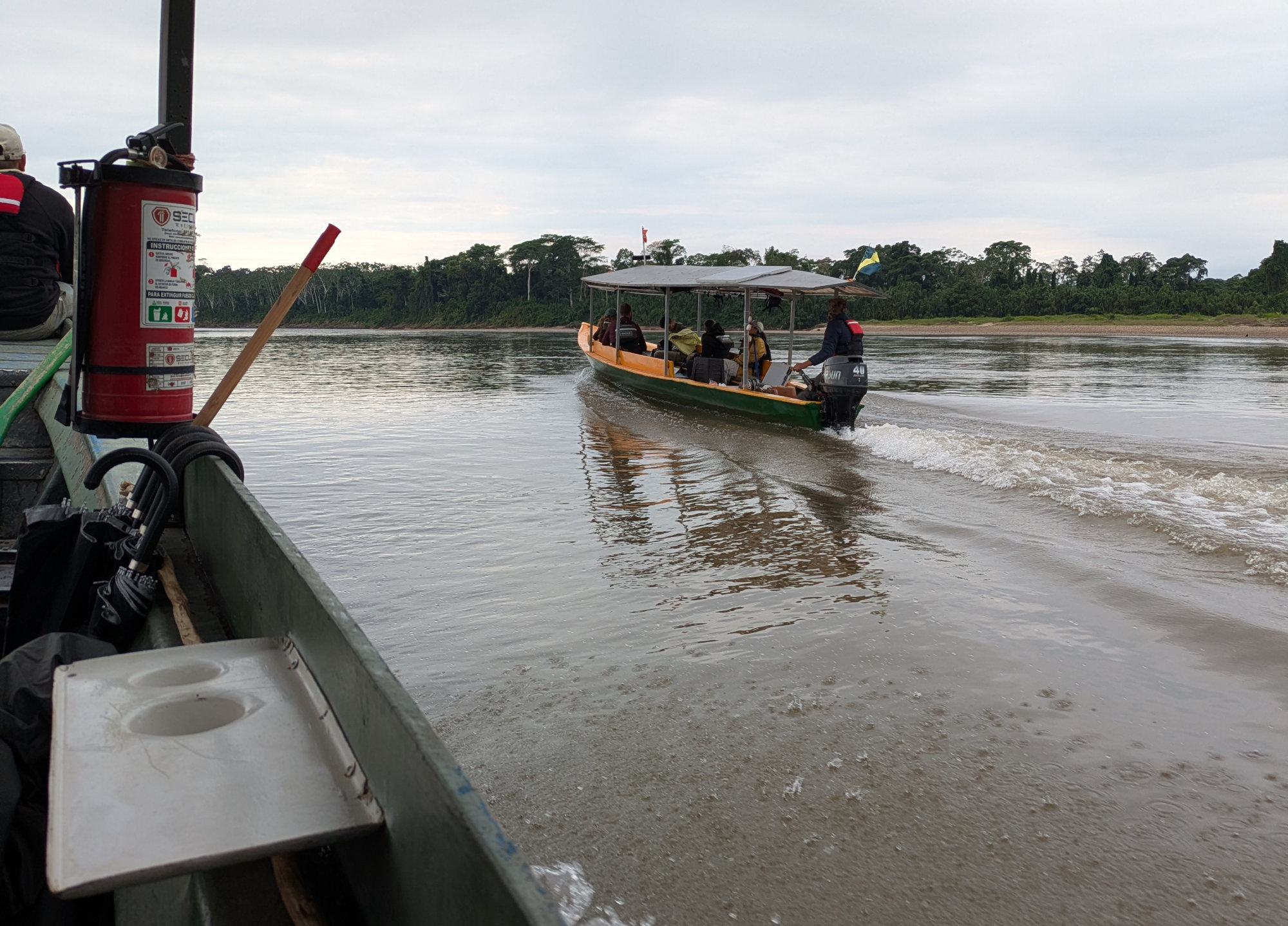
Stepping off the plane onto the tarmac, I was keenly and instantly aware of the high temperature and humidity - stifling! A 90-minute bus ride from Puerto Maldonado to Filadelphia was followed by an envigorating skiff boat ride upriver for 3 hours or so. (It was much more comfortable with the cooling effect of the moving water and moving boat) We saw a heard of capybaras on the shore, enjoyed the setting sun, and marveled at the power of the river and density of the jungle.
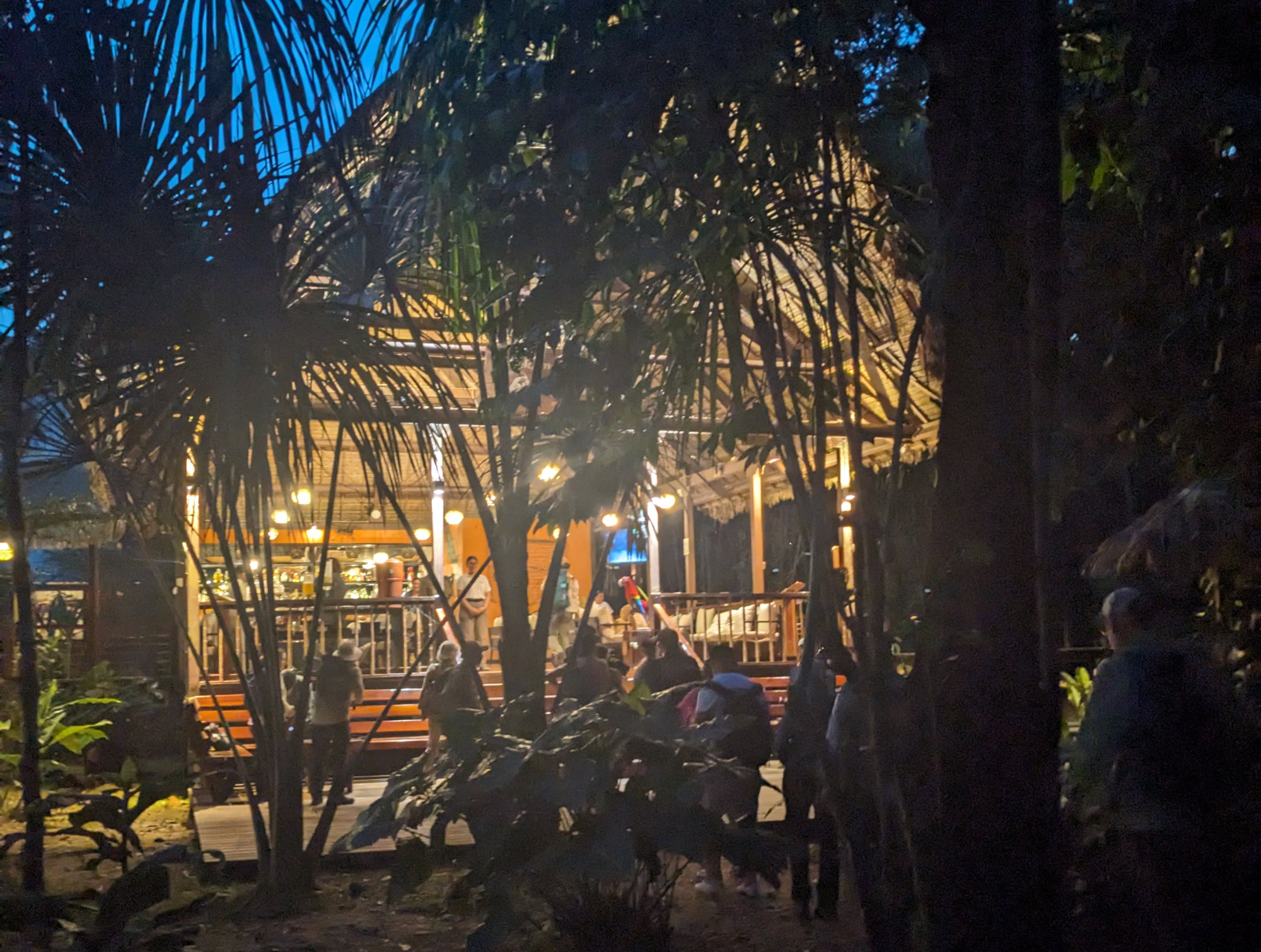
We arrived at Tambopata Research Center right at sunset so the 5 minute walk through the forest was quite dark, with plenty of forest life chittering and humming around us. We arrived just in time to attend a pre-dinner science talk about "Moth or Wasp?" presented by one of the local researchers. She did an excellent job!
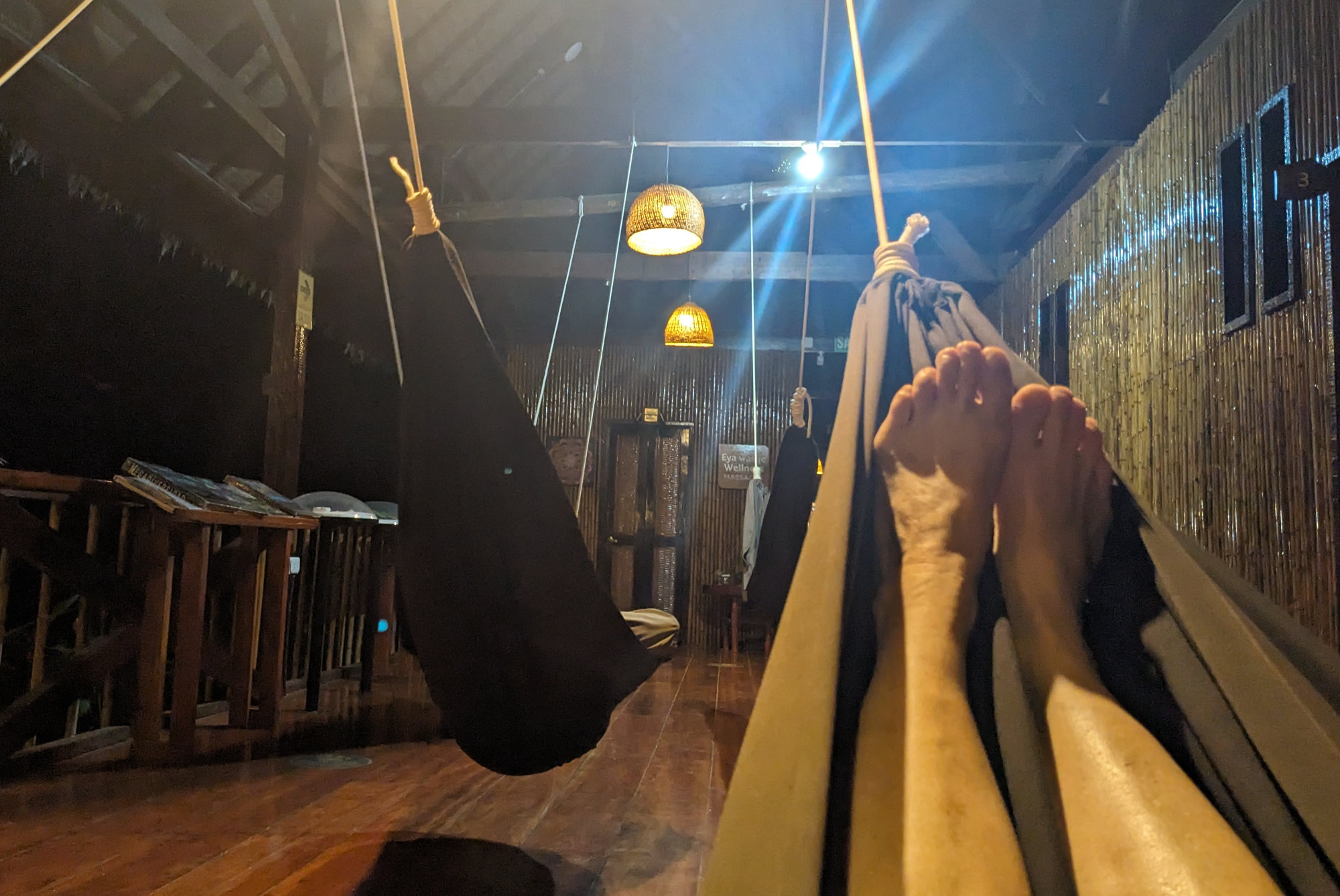
Everything here is open to the forest - our room, public area, and dining area - all are open. Fortunately, there were very few flying, biting bugs our entire time here. So, our dinner was wonderful and we spent the rest of our evening in open hammocks under fans - that little breeze was very helpful.
Tuesday, Sep 22, 2026
Lodging: Tambopata Research Center

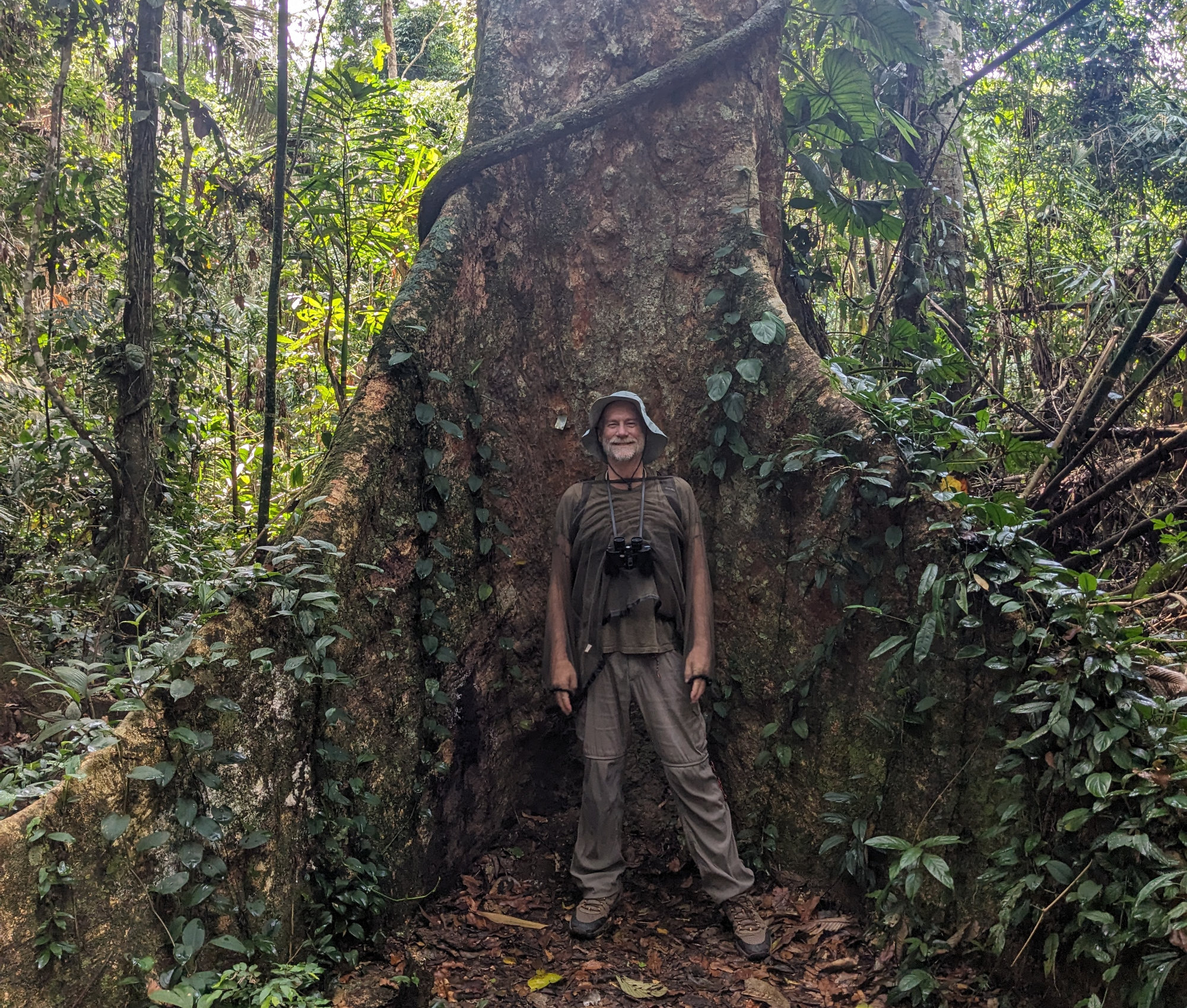
We then enjoyed a 4-hour hike through the jungle. It was a great way to get used to the area and hunt for exotic 'stuff'. We saw an owl, monkeys, turtles, macaws, a lizard, a turkey, lots of flowers, and many interesting trees.
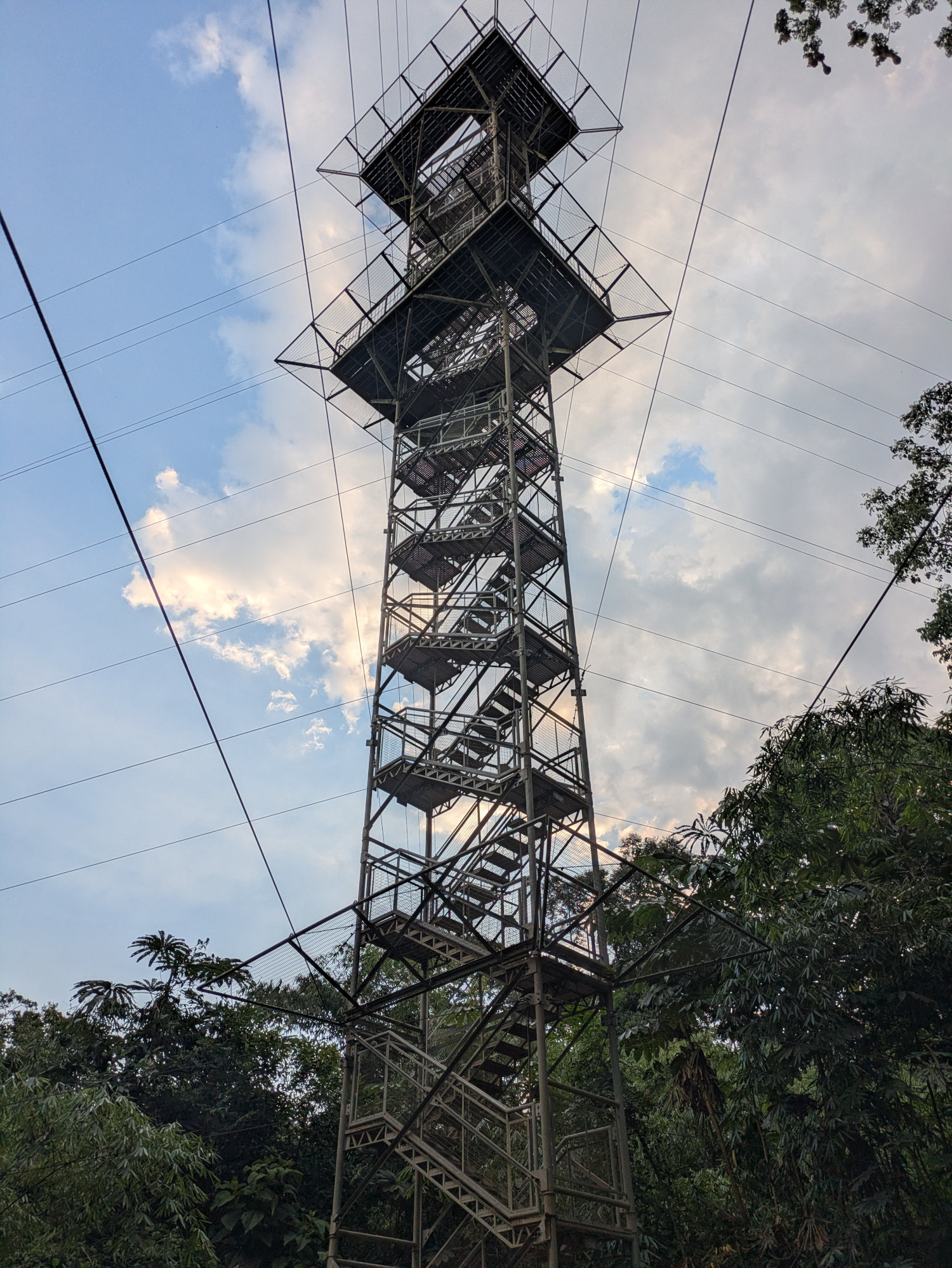
After a mid-day rest, our second adventure of the day was a hike to a lookout tower to get above the trees. We saw a porcupine, many more monkeys (howler, squirrel, capuchin, and spider), macaws, and some oropendola. On ebird.org, there is a list of all the Birds at Tambopata.

While at the lookout, we experienced a short rainstorm just before sunset. We even got a rainbow out of the deal. So, after we watched the sun go down, our walk back to the lodge was in the deep darkness of the forest. We were treated to fireflies, tarantulas, a few snakes, many various large insects, and a couple frogs.
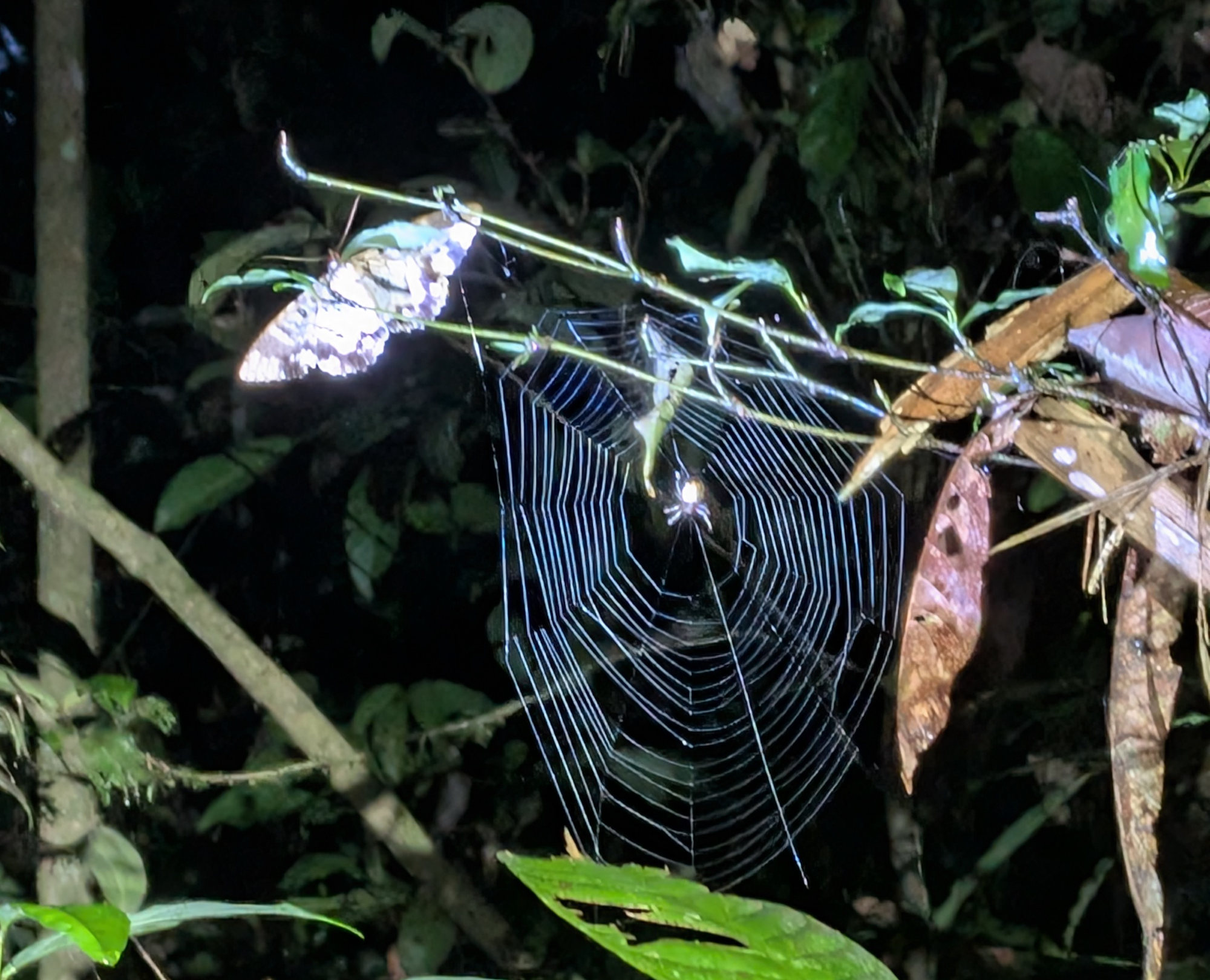
The usual great dinner was followed by an early rest because our day tomorrow starts at 4am.
Wednesday, Sep 23, 2026
Lodging: Tambopata Research Center

We weren't the only people to gather to watch the birds. There was a line of about 100 people sitting on portable stools about 70 yards or so from the call of clay that was the river bank years ago. We tried to be quiet, but humans aren't very good at that.
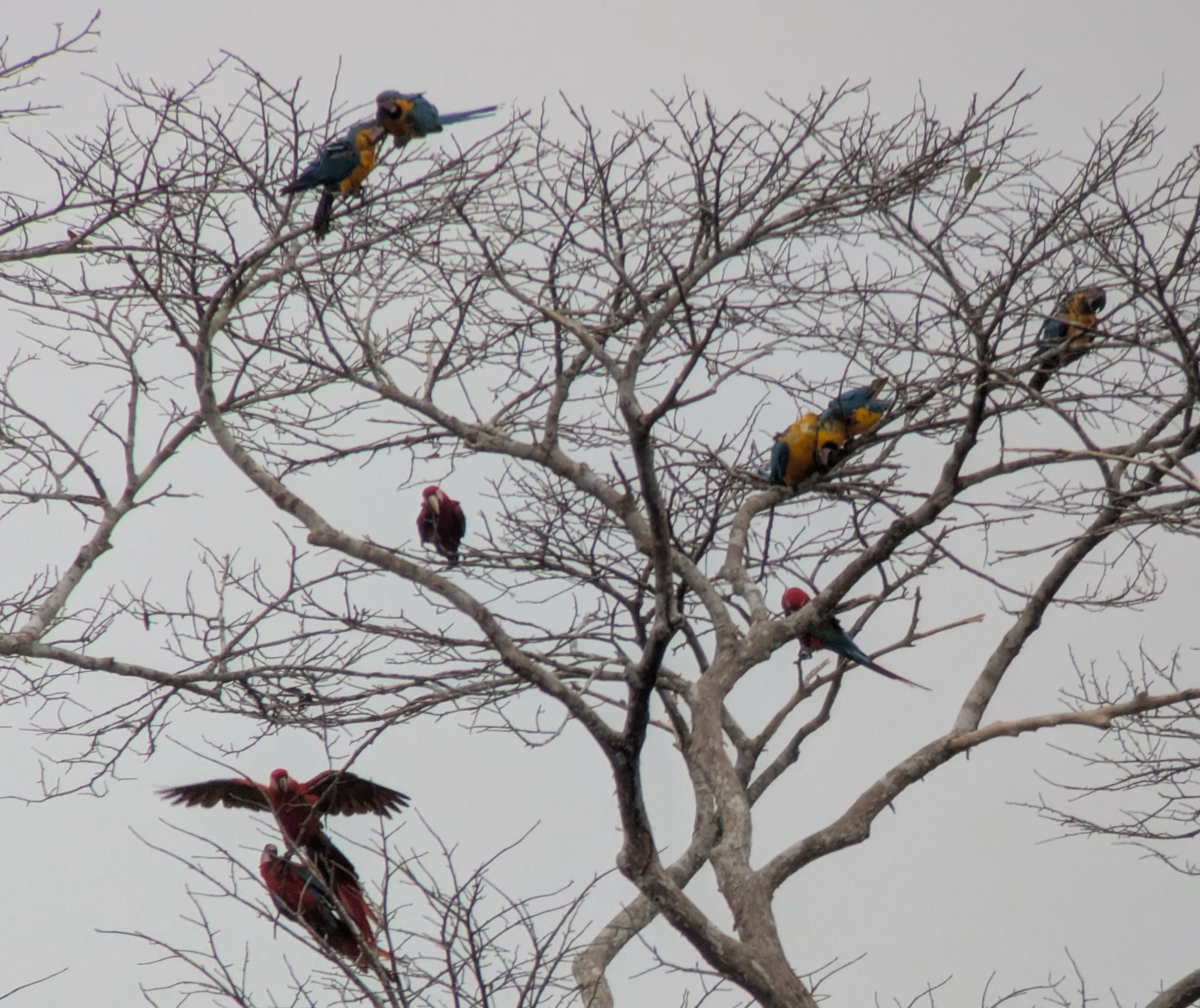
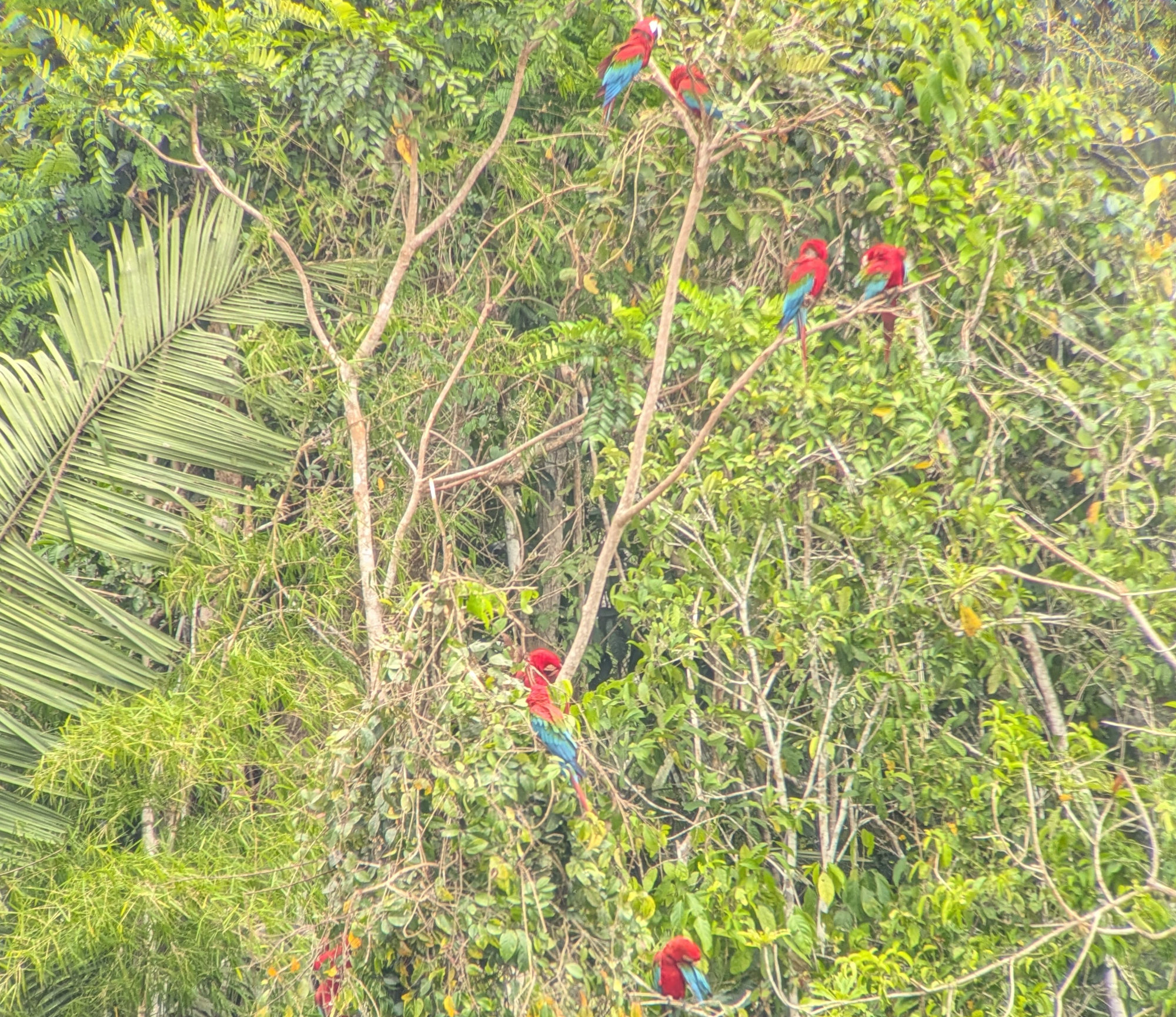
Eventually, birds flew in from all directions to perch in the trees, squawking continuously. Occasionally, a raptor bird would cruise by and all the macaws would scatter in all directions while some of them chased the interloper away. While we watched, only maybe 10% of the birds actually worked their way down to ground to 'lick' the clay. (I think it was because there were so many of us watching)
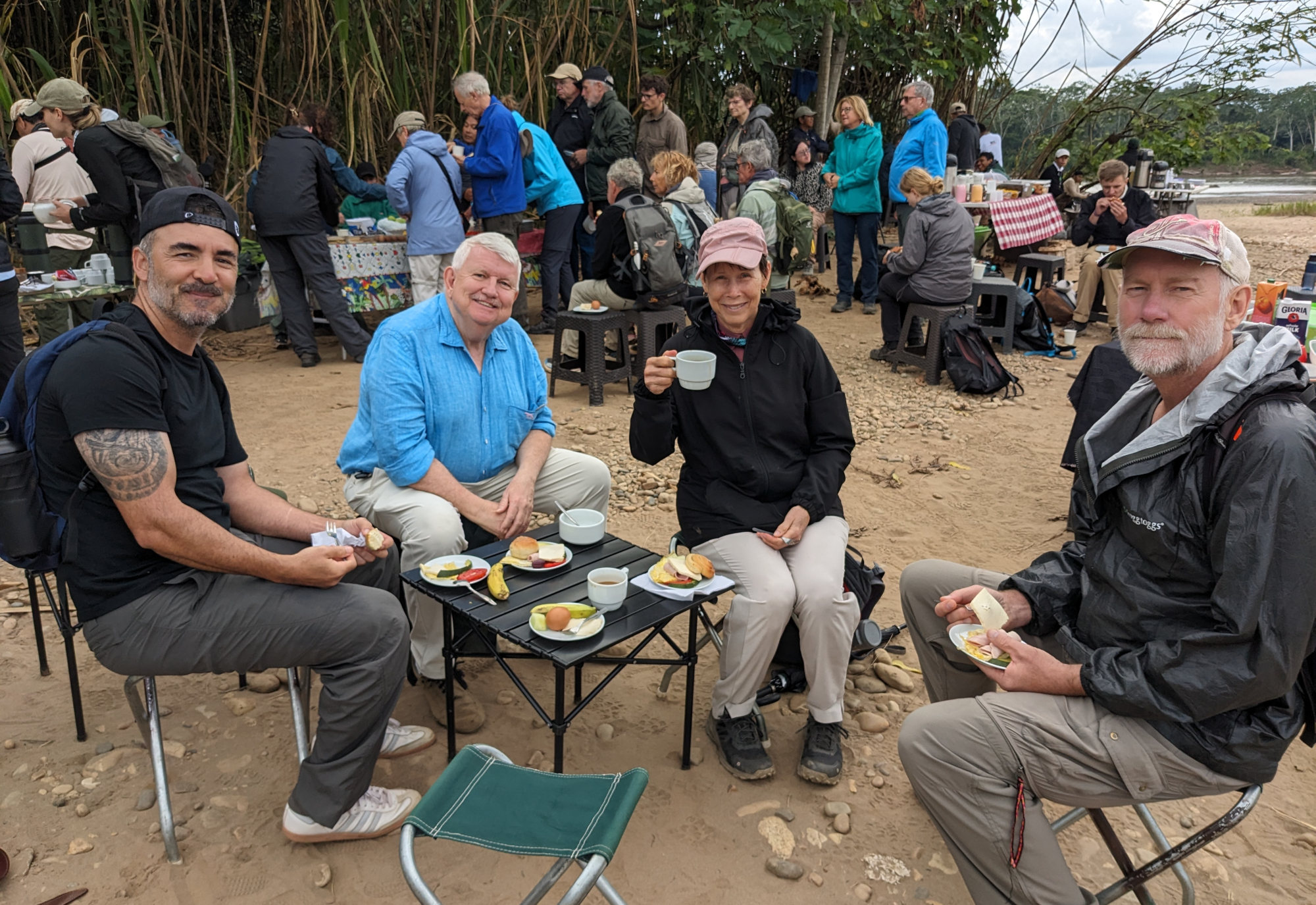
It was a great way to spend a couple hours looking through binoculars and taking turns getting close-up photos through our guide's spotting scope. We enjoyed a nice safari breakfast on the river bank around 7am and then hung around another couple hours until the birds dispersed.

Another boat ride upriver for lunch and a rest. Then, around 4pm, we headed out on our last excursion. This was a leisurely sunset boat ride. We just explored some side bays downriver where we found another herd of capybarras in the water. When we returned to the dock at about 6pm, it was dark and we met two cayman waiting in the water for us. They are in the alligator family.
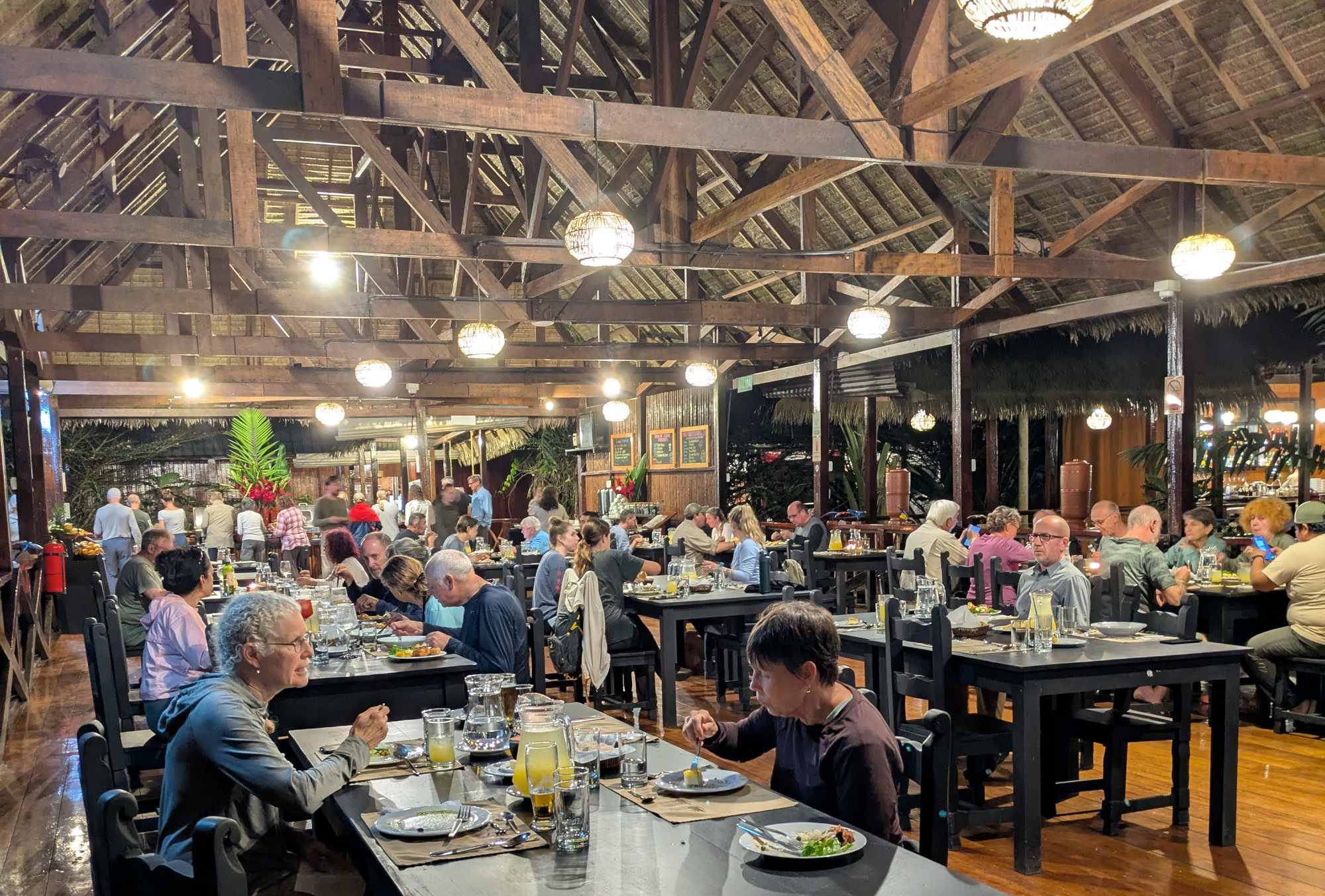
Time for one last dinner in our outdoor cafeteria.
Thursday, Sep 24, 2026
Lodging: plane

A local guide and driver met us at the airport and we did a walking tour of Lima to fill our afternoon and evening. Actually, much of it was driving slowly in Lima traffic - that was quite an experience right there.
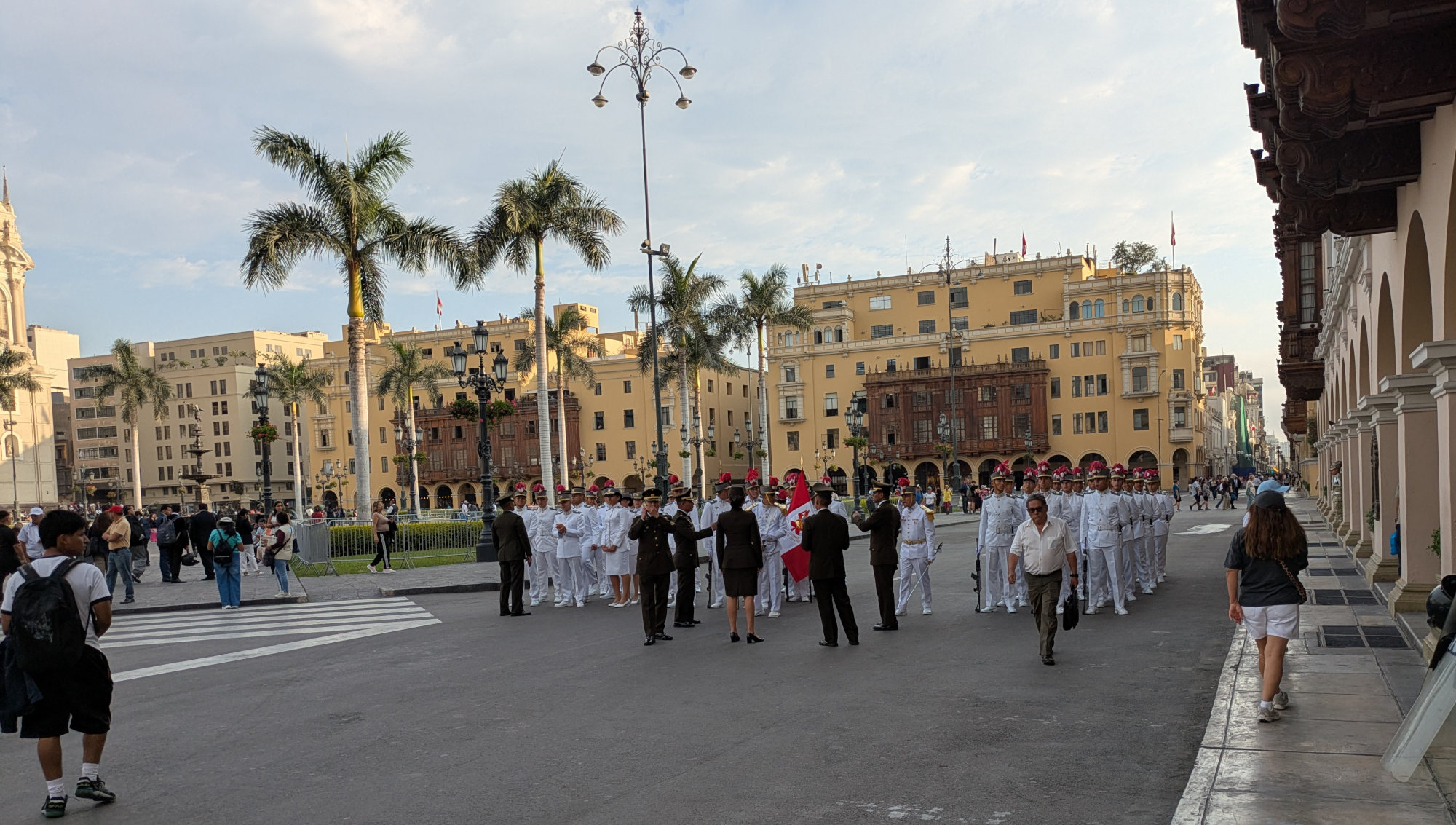
We toured the catacombs under a cathedral, walked by the president's residence, and got introduced to the general architecture.
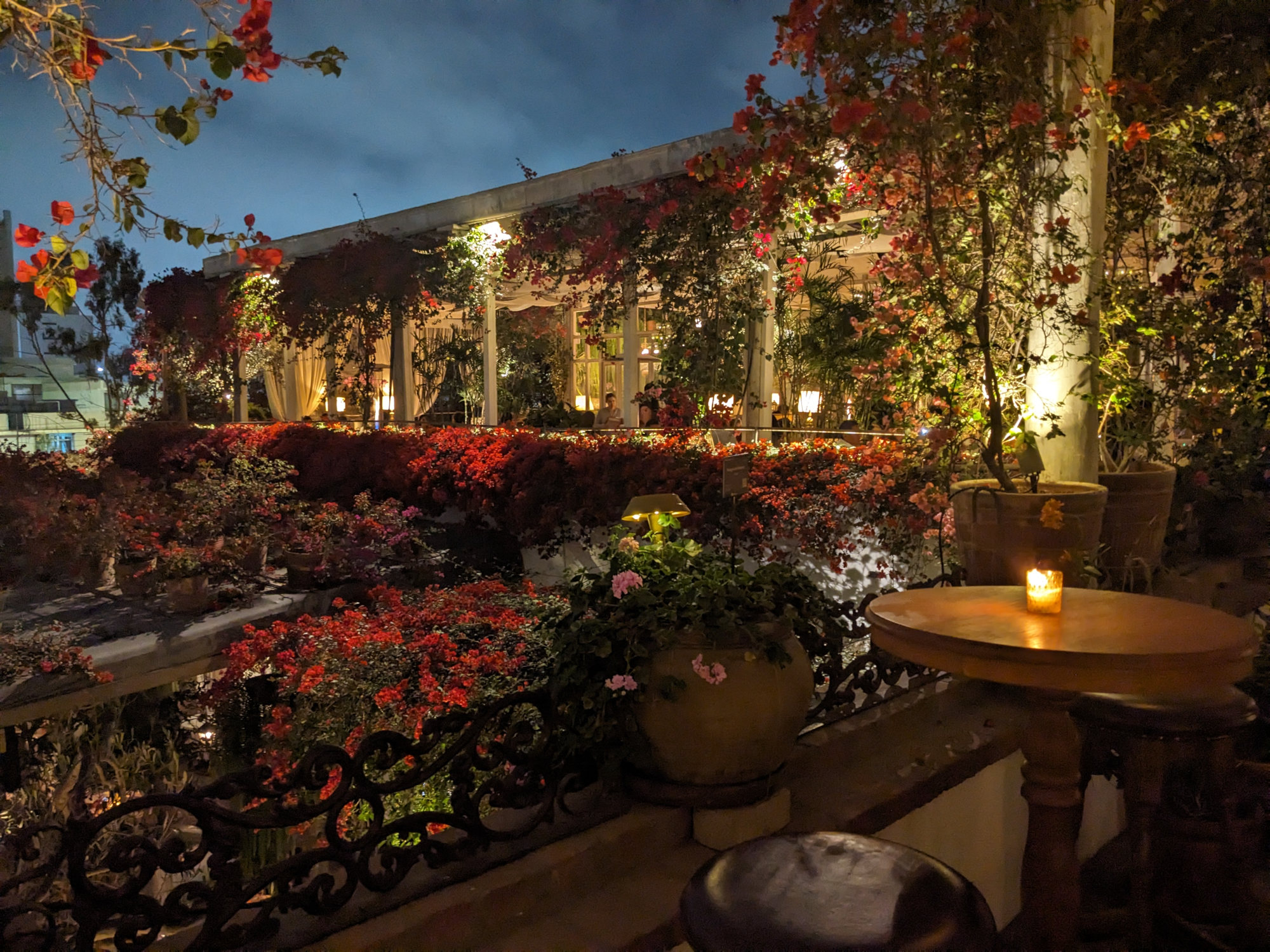
We had dinner at a very fancy restaurant.
The plane rides to New York and then MSP were both just fine. I slept a good chunk of the first leg. Customs went quickly, and there was no drama.
Here are some collections of the more interesting things we experienced on this trip... (click them for larger views)
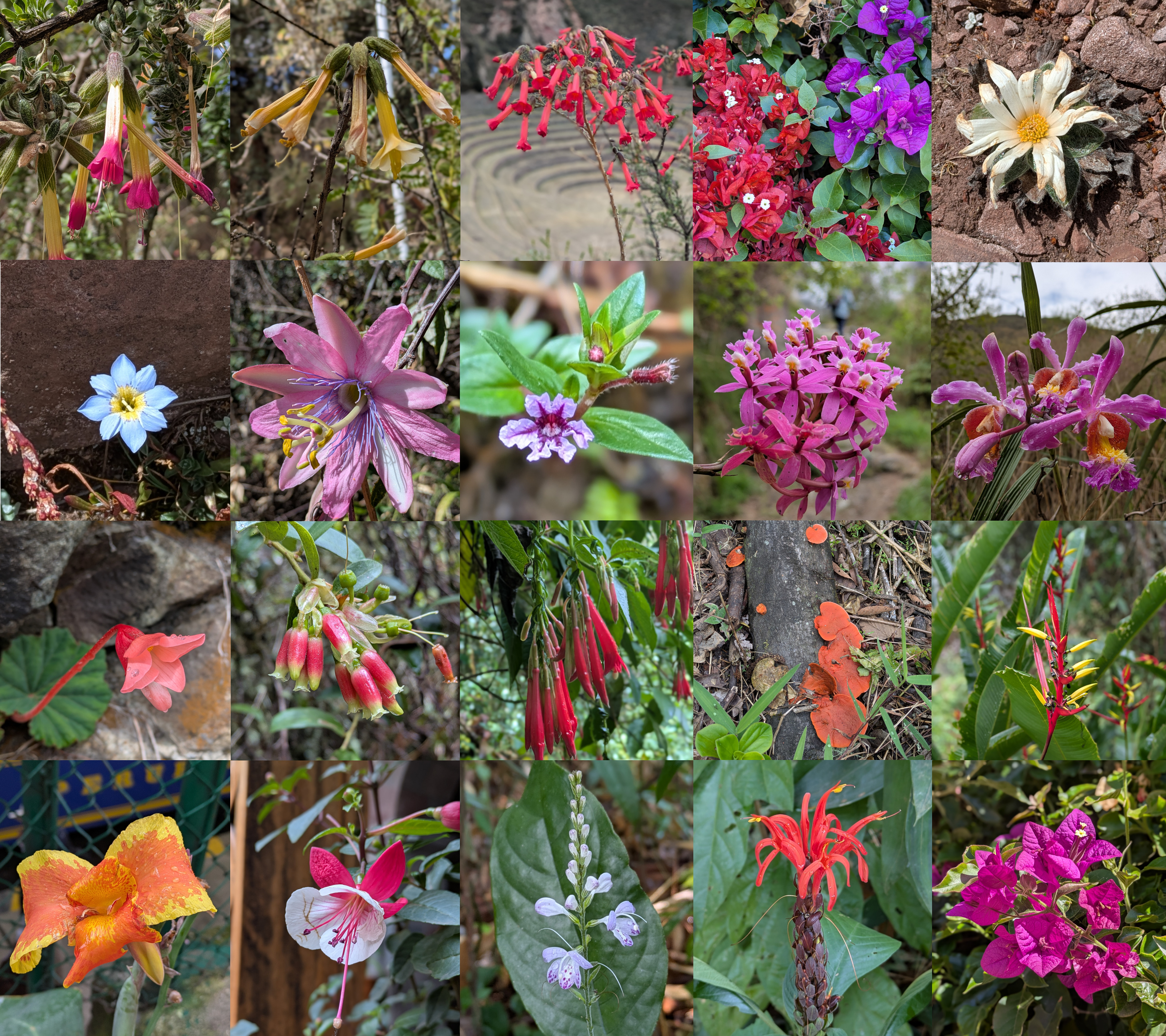
Flowers...
Animals...

Food - Lunch is the main meal of the day, and most of the time it was a three-course affair with starter, main dish, and dessert...

Hike On!
Find more Hiking Resources at www.HikingDude.com
Follow Me
Recent Comments